Everyone Started Somewhere
Here is a secret about the veteran food truck operator who seems to have it all figured out: they asked every dumb question you are afraid to ask. They just asked them five years ago.
"Do I really need a commissary?" Almost always, yes.
"Can I just park anywhere?" No.
"How much should I charge for tacos?" More than you think.
"Is this normal or am I failing?" Probably normal.
The difference between operators who figure it out and those who do not is not intelligence or talent. It is whether they found the right people to answer their questions honestly.
Why New Operators Do Not Ask
Fear of Looking Stupid
You spent a serious amount of money on a truck and you are not sure if you need a food handler card or a food manager certification. Asking feels like admitting you should not be in this business.
Here is the reality: the permitting landscape is a maze in every state. Texas HB 2844 took effect July 1, 2026, replacing the patchwork of separate city permits with a single statewide DSHS permit (cities can still enforce their own non-conflicting rules), and veteran operators are still working out what it means in practice. Not knowing things is normal. Pretending you know is dangerous.
Gatekeeping (Real and Perceived)
In some food truck communities, asking very broad questions can get short replies or silence, especially in high-traffic spaces where the same question comes up daily. This can create the impression that the community is hostile to beginners.
The truth is more nuanced. Operators get tired of answering "how do I start a food truck?" when it is asked several times a day with zero context. But if you ask a specific question that shows you have done some homework - "I am choosing between a 16-foot and a 20-foot truck for a 5-item taco menu in Orlando, what would you recommend?" - you will get generous, detailed answers.
The difference is specificity plus effort. Show that you are serious, and the community opens up.
Not Knowing Where to Ask
Each option has its own strengths: Facebook groups are great for reaching a big local audience fast, Reddit is good for candid back-and-forth discussion, dedicated forums can hold long-form threads, and your local association can put you in front of someone who has done exactly what you are trying to do. Many new operators are not sure which one fits which question, so the section below sorts it out.
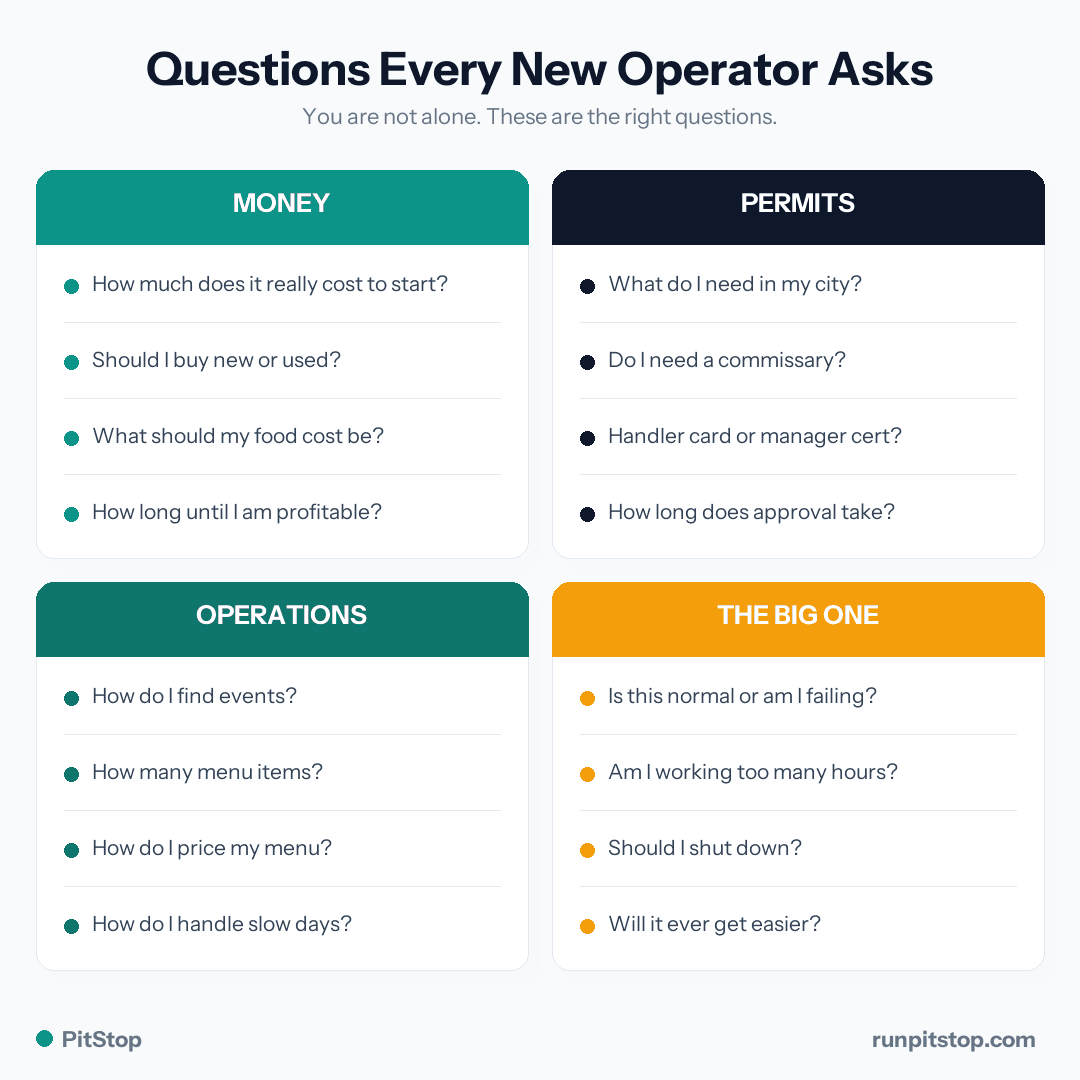
The Questions Every New Operator Asks
Based on what comes up across every food truck community, these are the questions that come up constantly. You are not alone in asking them.
Money Questions
- "How much does it REALLY cost to start?" (Answer: consistently more than you planned. The startup costs guide has the line items so you can budget with a margin.)
- "Should I buy new or used?" (Used trucks can need major repairs within the first couple of months. Factor repair risk into your decision, and get an inspection before you buy.)
- "What should my food cost percentage be?" (Aim for 30-35% of revenue, and the lower the better. Track it from day one.)
- "How long until I am profitable?" (Most operators say 12-24 months to hit consistent profitability.)
Permit Questions
- "What permits do I need in city]?" (This is always a maze. Your local health department and food truck association are the primary sources, and the [state permit guides lay out the sequence.)
- "Do I need a commissary?" (In most cities, yes, though the rules are shifting in some states. Texas moved to a single statewide permit under HB 2844 in July 2026, so check the current requirement for your state.)
- "What is the difference between a food handler card and food manager certification?" (Handler cards are basic food safety training. Manager certifications require a more rigorous exam and are often required for the person in charge of the truck.)
Operations Questions
- "How do I find events?" (Local food truck associations, event booking platforms, direct outreach to breweries and businesses, and regional groups where operators share leads.)
- "How many menu items should I have?" (Almost everyone starts with too many. 5-8 items is the sweet spot for most trucks.)
- "How do I price my menu?" (Food cost divided by 0.30-0.35 gives you a floor. Then adjust based on market and perceived value.)
The Big One
- "Is this normal or am I failing?" (If you are in your first year and feeling overwhelmed, stressed, and uncertain - that is normal. It does not mean the business is failing. It means you are in the hardest phase.)
Where to Get Answers
Best for In-Person Help
Your local food truck association. They exist to help operators in your area. Many have formal mentorship programs. This is the single highest-value connection a new operator can make.
Your commissary kitchen. The operators prepping alongside you at 5 AM are living the same life. Ask them questions. They have been where you are.
SCORE and your local SBDC. Free mentoring from experienced business owners. Ask specifically for someone with food service experience. They will not know your health department, but they will know how to read your numbers.
Best for Online Q&A
Your regional Facebook group. The one tied to your local association reaches the most operators in your market fastest. Post a specific question with your city in it, and you will usually hear from someone who has dealt with the exact office you are dealing with.
Reddit's r/foodtrucks and r/smallbusiness. Good for candid answers to general questions - equipment, pricing psychology, "is this normal?" - where local context does not matter. Remember that replies are anonymous, so weigh advice accordingly.
Dedicated forums. FoodTruck.forum holds long-form threads and is worth searching before you post, even if replies come slower. Mobile Cuisine's articles are good background reading.
Best for General Research
Podcasts: Food Truck Beast, The Kitchen Convoy. Real operators sharing real experience.
The guides on this site: You are reading one. They cover startup costs, profit margins, permits by state, and more - written with sourced numbers and no filler.
How to Ask Good Questions
This applies everywhere. The quality of your question determines the quality of the answer.
Bad: "How do I start a food truck?"
Good: "I have my budget set aside and I am looking at a used 18-foot truck. Planning a 6-item BBQ menu in Austin. What am I not thinking about?"
Bad: "What permits do I need?"
Good: "I am in Maricopa County, AZ - do I need both the county health permit and a separate City of Phoenix business license?"
Bad: "Is this worth it?"
Good: "My last five events averaged 33% food cost and about 12% labor. Is that a healthy margin or should I be concerned?"
Specific questions with context get specific answers. Vague questions get vague answers or silence.
The Culture of Asking
Here is something the research consistently shows about the food truck community: veterans help newcomers who demonstrate they are serious.
The operator who asks "I did X, it went wrong, what should I have done?" gets respect. They tried, they failed, they want to learn.
The operator who asks "tell me everything I need to know about starting a food truck" gets nothing. They are asking someone else to do the work they should have done.
Show your homework. Show your effort. Be honest about what you do not know. The food truck community has a genuine pay-it-forward culture - but it is reserved for people who are putting in the work.
You Are Not Alone
There are tens of thousands of active food trucks in the U.S. Every single operator started where you are right now - nervous, uncertain, full of questions. The ones who made it found other operators to lean on.
Your questions are not dumb. They are the same questions everyone asks. The only dumb move is not asking them.
Do the homework first, then ask: the state-by-state permit guides answer the permit questions above, so the one you bring to your association can be the specific one.