Utah's booming tech sector (the "Silicon Slopes") and world-class ski resorts have created surprising demand for food trucks - and the state's straightforward health department process makes launching one more accessible than many operators expect.
Utah's food truck scene is growing fast, led by Salt Lake City's diverse food truck community. The Silicon Slopes tech corridor between Salt Lake and Provo generates strong weekday lunch demand. Park City and other ski resort towns offer premium seasonal vending. SLC's food truck culture features everything from Polynesian food to gourmet grilled cheese, reflecting the state's increasingly diverse population. The Friday food truck gatherings at various SLC parks are popular community events.
Important: Always verify current fees and requirements directly with the relevant agencies. This guide is a starting point for your research, not a substitute for official guidance.
What Makes Utah Unique
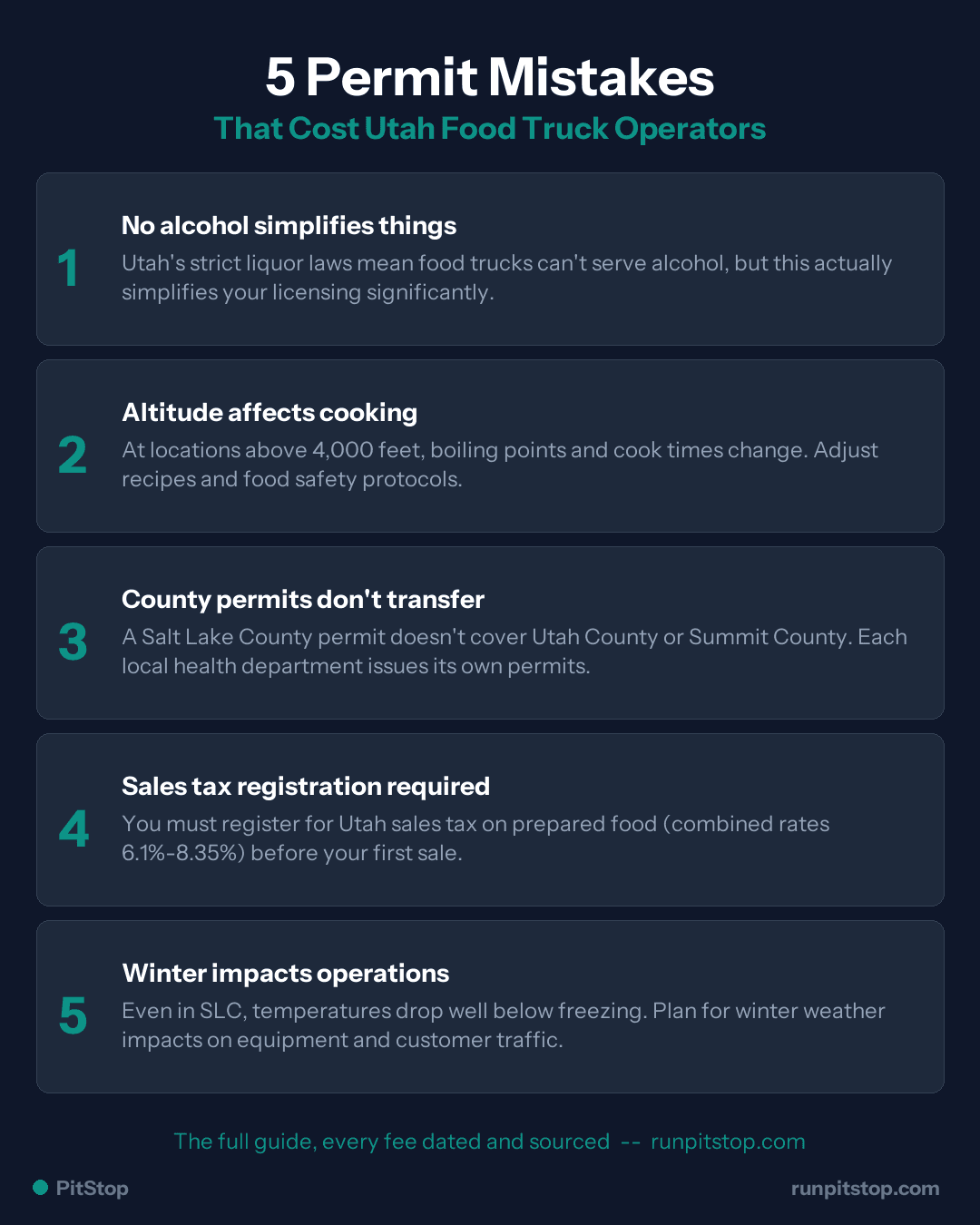
Utah's liquor laws are among the strictest in the US, but since most food trucks don't serve alcohol, this is rarely a practical issue. The state has a strong cottage food law (Utah Cottage Food Act) but it does not cover food truck operations. Local health departments (county-level) are the primary permitting authorities. Utah's growing tech economy has created consistent weekday lunch demand in the Silicon Slopes corridor. Park City during Sundance Film Festival is one of the most lucrative short-term vending opportunities in the country.
Your next steps
Most operators sort these out before their first event.
Get food truck insurance
General liability is what most events require. Get a quote in a few minutes.
Get a quoteFinance your truck or equipment
Compare equipment and working-capital options, with a soft check to start.
See financing optionsAffiliate partners: PitStop may earn a commission at no extra cost to you. How this works.
State-Level Requirements
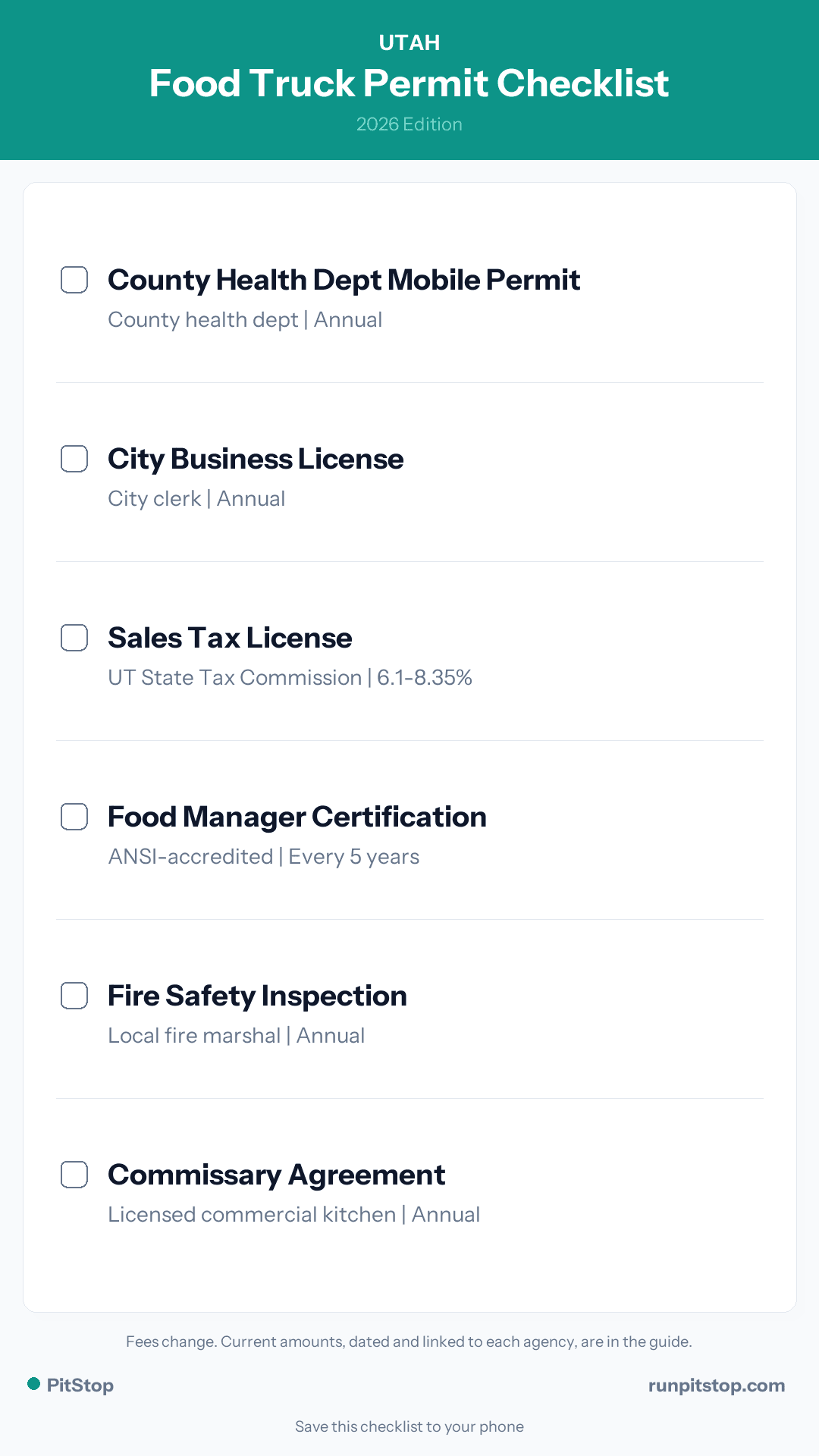
1. Mobile Food Establishment Permit
The Utah Department of Health and Human Services - Bureau of Environmental Health oversees food safety and mobile food unit permitting in Utah.
- Where to apply: Utah Department of Health and Human Services - Bureau of Environmental Health website
- Permit fee: $150–$500
- Renewal: Annually (verify with your local health department)
2. Sales Tax Registration
Register with the Utah State Tax Commission to collect and remit sales tax.
- Sales tax rate: 6.1% state + local (total often 7.25–8.35%)
- Cost to register: Free
3. Food Handler Certification
Utah requires food handlers to complete an approved food safety training program.
- Cost: $10–$15
- Renewal: Varies by jurisdiction
- Who needs it: Every person who handles, prepares, or serves food
4. Food Manager Certification
Utah requires at least one Certified Food Protection Manager on-site during operating hours.
- Approved exams: ServSafe, Prometric, or other nationally accredited programs
- Renewal: Every 5 years
- Cost: Typically $80–$180 depending on provider
5. Business Registration
- LLC or Corporation: File with the Utah Secretary of State
- Sole Proprietorship: Register your assumed business name (DBA) with the county clerk
- Federal EIN: Free from the IRS - required for tax filing, hiring, and opening a business bank account
Commissary Requirements
Most areas in Utah require a commissary agreement - a licensed commercial kitchen where you prep food, clean equipment, and store supplies. Check with your local health department for commissary requirements in your operating area.
Your commissary must be licensed and in good standing. You'll typically need a commissary agreement letter for your permit application.
City-Specific Requirements
Salt Lake City
Salt Lake County Health Department mobile food establishment permit. City business license. Commissary or self-contained unit required.
- Permit fees: $250–$600
Provo
Utah County Health Department mobile food permit. City of Provo business license. Strong BYU campus demand.
- Permit fees: $200–$450
Park City
Summit County Health Department permit and Park City business license. Premium seasonal market during ski season and Sundance Film Festival.
- Permit fees: $300–$700
Ogden
Weber-Morgan Health Department food service permit and City of Ogden business license. Growing downtown food truck scene.
- Permit fees: $175–$400
Each jurisdiction handles permitting independently - contact your local health department for specific requirements and fees.
Fire Safety
If your truck uses propane, deep fryers, or open flame cooking, you'll need:
- A fire suppression system (hood and Ansul system) for grease-producing equipment
- Fire extinguisher (Class K for kitchen fires, Class ABC for general)
- Fire safety inspection from the local fire marshal
- Propane tank certification and proper ventilation
Cost for fire suppression system: Typically $3,000–$6,000+ depending on your setup. Get multiple quotes from certified installers.
Common Pitfalls for Utah Operators
Renewal Timeline at a Glance
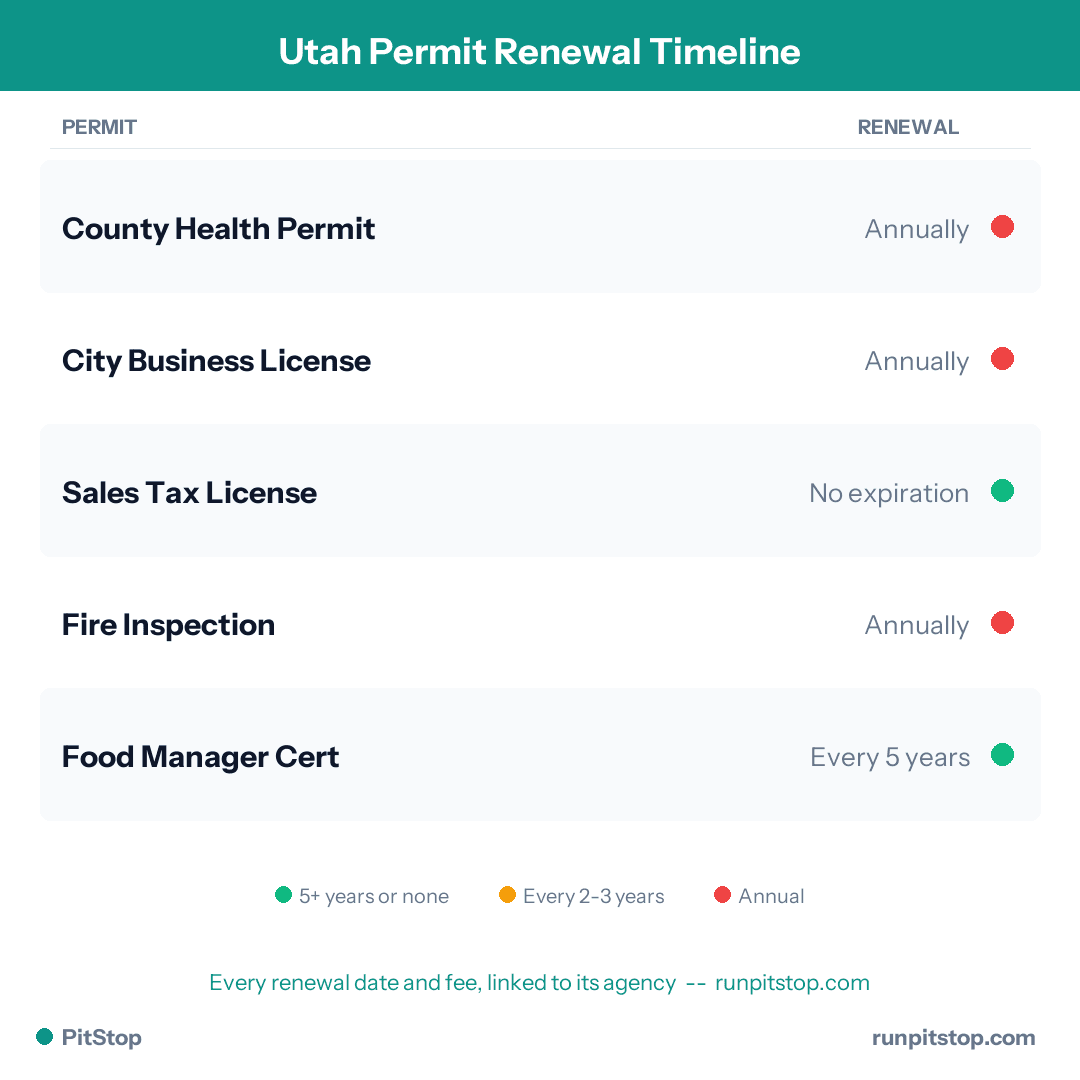
| Permit | Typical Renewal |
|---|---|
| Health/Food Service Permit | Annually |
| Business License | Annually |
| Food Handler Card | Varies by jurisdiction |
| Food Manager Certification | Every 5 years |
| Fire Inspection | Annually |
| Commissary Agreement | Annually (or per contract) |
Before you apply
Verify every fee in this guide with the issuing agency before you pay it; fee schedules change mid-year and the agency's own page is the only number that counts. Run your first few events through the per-event profit calculator, and start the paperwork 3–4 months before opening day: inspection slots, commissary letters and certifications take longer than the application itself.