Connecticut's dense population, affluent suburbs, and legendary pizza culture create a unique market for food trucks - but navigating 169 independent municipalities, each with their own permitting rules, is the real challenge in the Constitution State.
Connecticut's food truck scene thrives in New Haven, Hartford, and the Fairfield County corridor. Pizza trucks (inspired by New Haven's famous apizza tradition), lobster rolls, and farm-to-truck concepts are popular. The state's proximity to New York City means operators face high expectations for quality and creativity. Brewery partnerships and seasonal events drive significant revenue.
Important: Always verify current fees and requirements directly with the relevant agencies. This guide is a starting point for your research, not a substitute for official guidance.
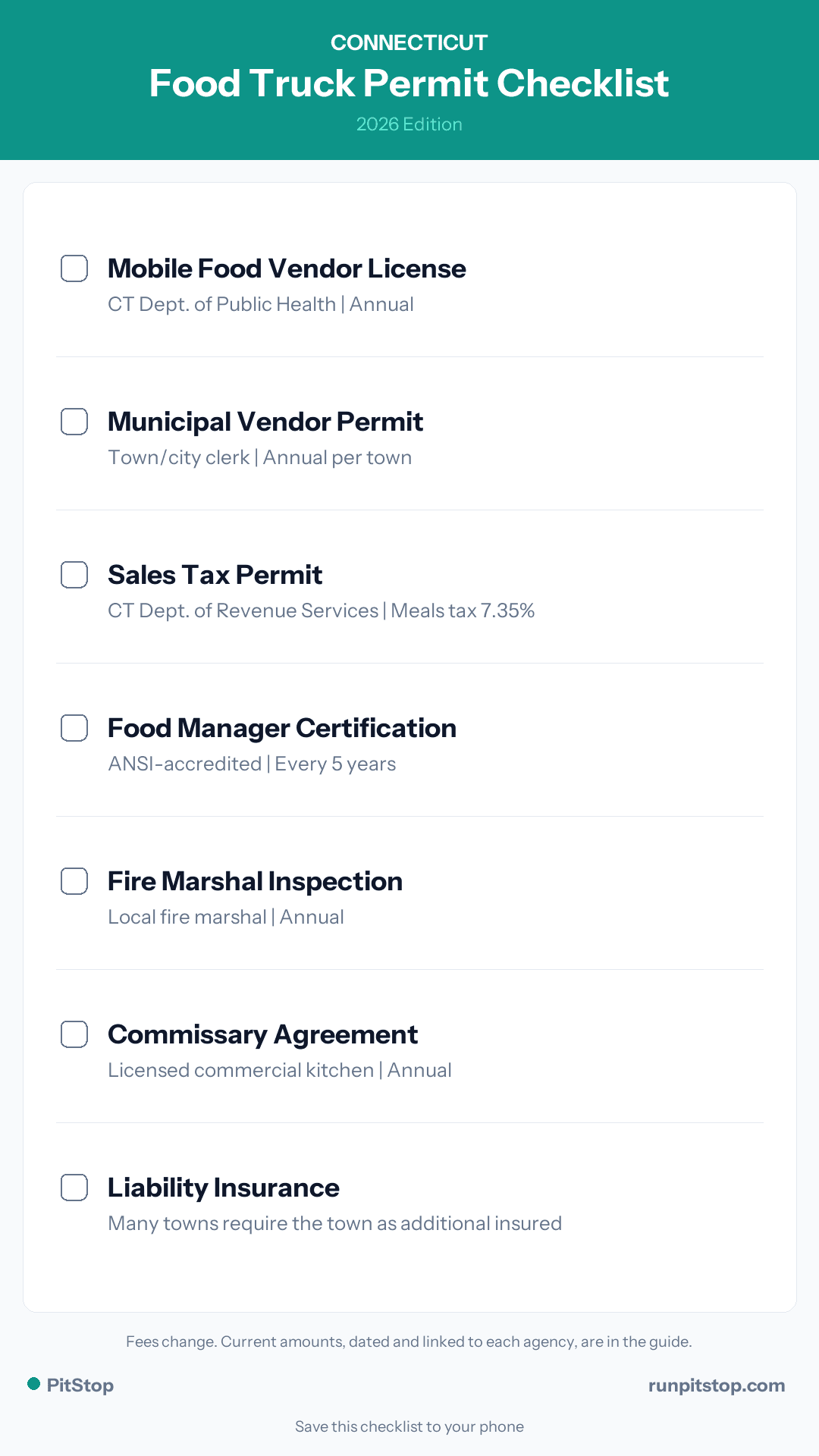
What Makes Connecticut Unique
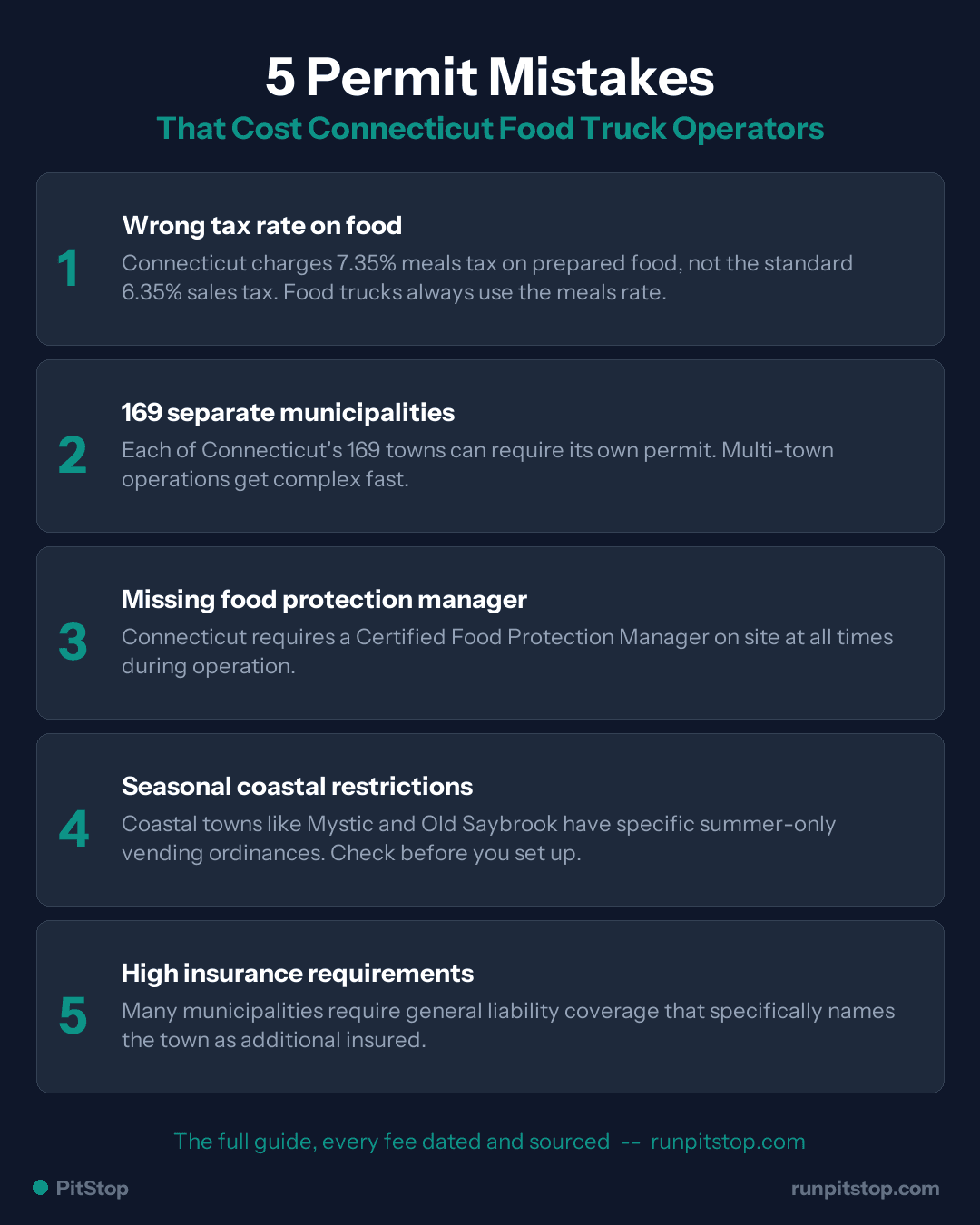
Connecticut's 169 municipalities each have independent authority over food truck permitting, which means a successful multi-town operation requires significant administrative work. The state passed PA 19-153, which prevents municipalities from outright banning food trucks on public property, but cities can still regulate time, place, and manner. Connecticut also has a separate catering permit requirement if you serve at private events.
Your next steps
Most operators sort these out before their first event.
Get food truck insurance
General liability is what most events require. Get a quote in a few minutes.
Get a quoteFinance your truck or equipment
Compare equipment and working-capital options, with a soft check to start.
See financing optionsAffiliate partners: PitStop may earn a commission at no extra cost to you. How this works.
State-Level Requirements
1. Mobile Food Vendor License
The Connecticut Department of Public Health oversees food safety and mobile food unit permitting in Connecticut.
- Where to apply: Connecticut Department of Public Health website
- Permit fee: $150–$300
- Renewal: Annually (verify with your local health department)
2. Sales Tax Registration
Register with the Connecticut Department of Revenue Services to collect and remit sales tax.
- Sales tax rate: 6.35% (meals tax 7.35% for prepared foods)
- Cost to register: Free
3. Food Handler Certification
Connecticut does not have a mandatory statewide food handler card requirement, but many local jurisdictions require one. Check with your local health department.
4. Food Manager Certification
Connecticut requires at least one Certified Food Protection Manager on-site during operating hours.
- Approved exams: ServSafe, Prometric, or other nationally accredited programs
- Renewal: Every 5 years
- Cost: Typically $80–$180 depending on provider
5. Business Registration
- LLC or Corporation: File with the Connecticut Secretary of State
- Sole Proprietorship: Register your assumed business name (DBA) with the county clerk
- Federal EIN: Free from the IRS - required for tax filing, hiring, and opening a business bank account
Commissary Requirements
Most areas in Connecticut require a commissary agreement - a licensed commercial kitchen where you prep food, clean equipment, and store supplies. Connecticut requires mobile food vendors to have a commissary or approved food service establishment for food storage, preparation, and truck servicing. The agreement must be submitted with your permit application.
Your commissary must be licensed and in good standing. You'll typically need a commissary agreement letter for your permit application.
City-Specific Requirements
New Haven
New Haven has a thriving food truck scene, especially around Yale University and the New Haven Green. The city requires a local vendor permit and health department inspection. Competition near the famous pizza restaurants is fierce, and proximity restrictions apply on Wooster Street.
- Permit fees: $100–$250
Hartford
Hartford has embraced food trucks in the downtown business district, especially during the lunch rush near the Capitol and insurance company offices. A city vendor permit and Hartford health department approval are required. Food truck festivals in Bushnell Park are popular summer events.
- Permit fees: $150–$300
Stamford
Stamford's corporate offices and proximity to NYC make it a premium food truck market. The city requires a mobile vendor license and has designated vending zones in the downtown area. Higher permit fees reflect the upscale market.
- Permit fees: $200–$400
Each jurisdiction handles permitting independently - contact your local health department for specific requirements and fees.
Fire Safety
If your truck uses propane, deep fryers, or open flame cooking, you'll need:
- A fire suppression system (hood and Ansul system) for grease-producing equipment
- Fire extinguisher (Class K for kitchen fires, Class ABC for general)
- Fire safety inspection from the local fire marshal
- Propane tank certification and proper ventilation
Cost for fire suppression system: Typically $3,000–$6,000+ depending on your setup. Get multiple quotes from certified installers.
Common Pitfalls for Connecticut Operators
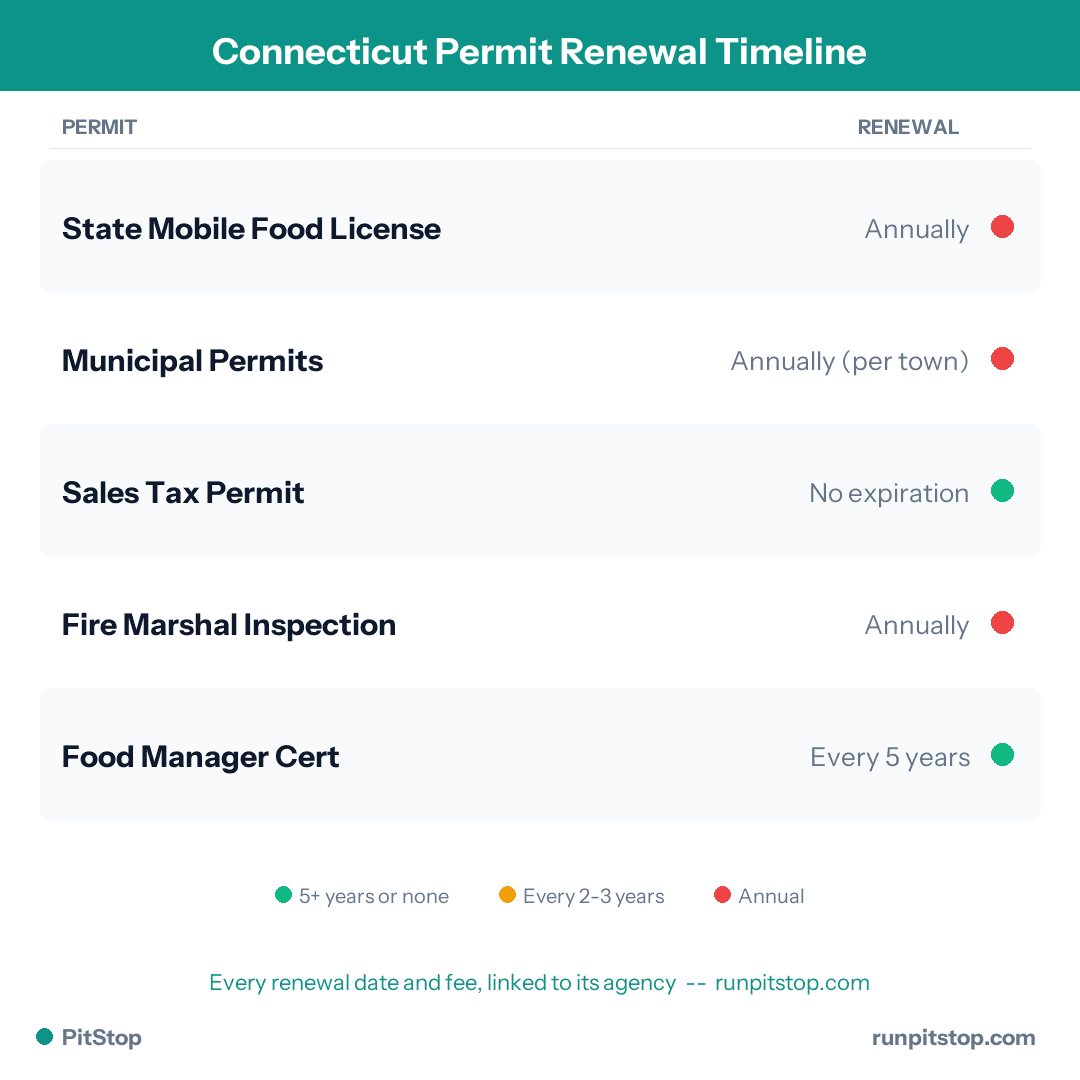
Renewal Timeline at a Glance
| Permit | Typical Renewal |
|---|---|
| State Mobile Food Vendor License | Annually |
| Municipal Vendor Permits | Annually (per municipality) |
| Sales Tax Permit | No expiration (ongoing filing) |
| Fire Marshal Inspection | Annually |
Before you apply
Verify every fee in this guide with the issuing agency before you pay it; fee schedules change mid-year and the agency's own page is the only number that counts. Run your first few events through the per-event profit calculator, and start the paperwork 3–4 months before opening day: inspection slots, commissary letters and certifications take longer than the application itself.