Nebraska's food truck industry has exploded in Omaha and Lincoln, where events like the College World Series and Husker football Saturdays draw massive mobile-food-hungry crowds - but the regulatory landscape spans 93 counties with varying rules.
Omaha leads the state with a vibrant food truck culture anchored by weekly rallies, brewery partnerships, and the Old Market district. Lincoln's Haymarket area and UNL campus are prime locations. Operators lean into barbecue, Latin cuisine, and creative fusion menus that cater to Midwest palates.
Important: Always verify current fees and requirements directly with the relevant agencies. This guide is a starting point for your research, not a substitute for official guidance.
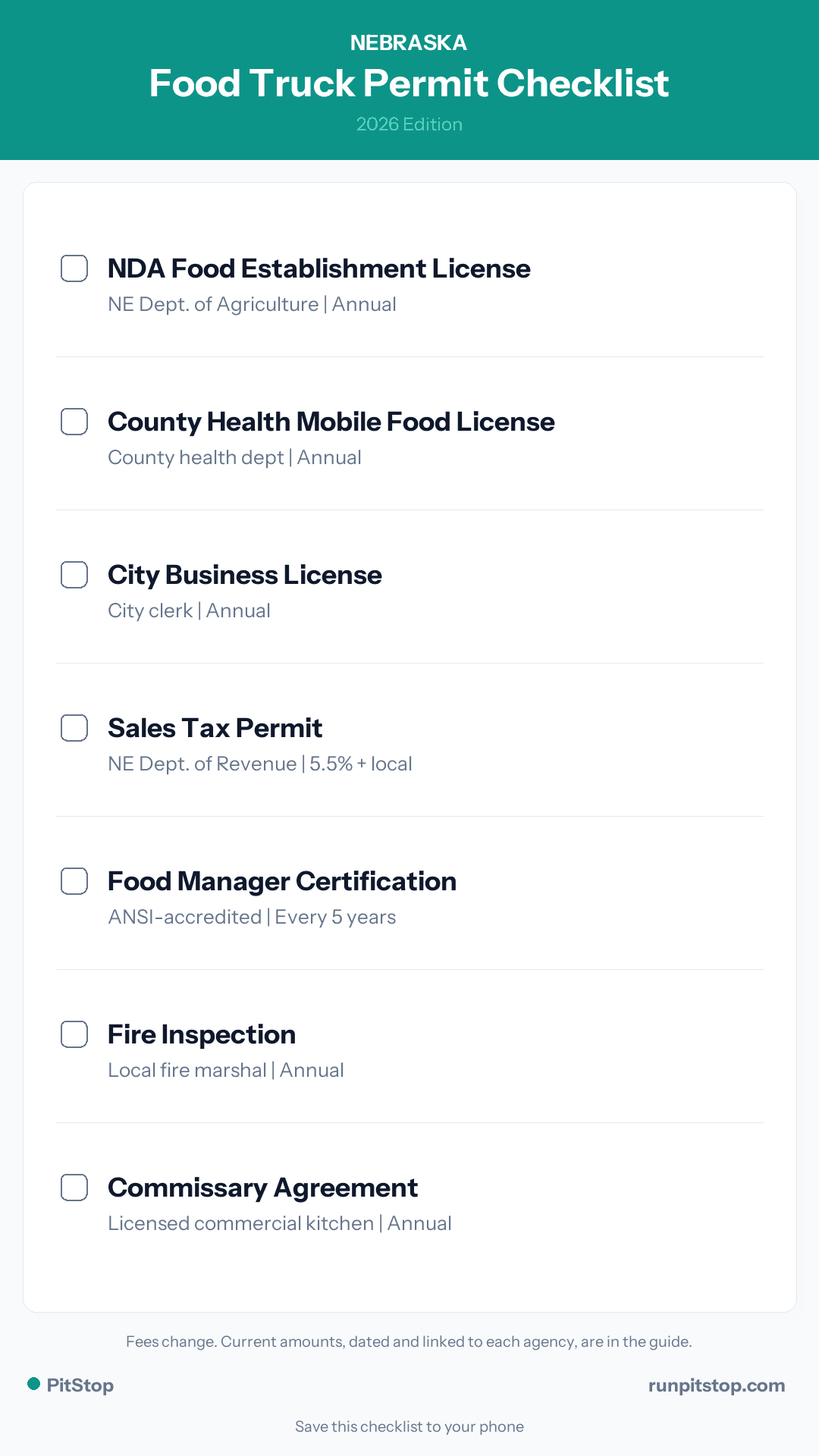
What Makes Nebraska Unique
Nebraska updated its cottage food law in 2021 (LB 474), expanding the types of foods that can be sold without a license, but food truck operations still require full food establishment licensing. Omaha has been increasingly food-truck-friendly, reducing some red tape in recent years. The Nebraska Department of Agriculture is the primary state-level regulator for food safety.
Your next steps
Things most food truck operators end up needing.
Get food truck insurance
General liability is what most events require. Get a quote in a few minutes.
Get a quoteAffiliate partners: PitStop may earn a commission at no extra cost to you. How this works.
State-Level Requirements
1. Mobile Food Establishment Permit
The Nebraska Department of Agriculture - Food Safety and Consumer Protection oversees food safety and mobile food unit permitting in Nebraska.
- Where to apply: Nebraska Department of Agriculture - Food Safety and Consumer Protection website
- Permit fee: Omaha (Douglas County): $583 a year plus a $200 initial fee; elsewhere the Department of Agriculture fee, capped by statute at $122 initial and $61 a year (checked Nov 9, 2026)
- Renewal: Annually (verify with your local health department)
2. Sales Tax Registration
Register with the Nebraska Department of Revenue to collect and remit sales tax.
- Sales tax rate: 5.5% state + local (total often 7–8%)
- Cost to register: Free
3. Food Handler Certification
Nebraska requires food handlers to complete an approved food safety training program.
- Cost: $10–$15
- Renewal: Varies by jurisdiction
- Who needs it: Every person who handles, prepares, or serves food
4. Food Manager Certification
Nebraska requires at least one Certified Food Protection Manager on-site during operating hours.
- Approved exams: ServSafe, Prometric, or other nationally accredited programs
- Renewal: Every 5 years
- Cost: Typically $80–$180 depending on provider
5. Business Registration
- LLC or Corporation: File with the Nebraska Secretary of State
- Sole Proprietorship: Register your assumed business name (DBA) with the county clerk
- Federal EIN: Free from the IRS - required for tax filing, hiring, and opening a business bank account
Form your LLC
Set up the LLC most operators file for liability protection. A few minutes; the provider shows the cost plus state fees.
Start your LLCAffiliate partner. PitStop may earn a commission at no extra cost to you. How this works
Commissary Requirements
Most areas in Nebraska require a commissary agreement - a licensed commercial kitchen where you prep food, clean equipment, and store supplies. Check with your local health department for commissary requirements in your operating area.
Your commissary must be licensed and in good standing. You'll typically need a commissary agreement letter for your permit application.
City-Specific Requirements
Omaha
Douglas County Health Department mobile food establishment license. Requires commissary agreement and annual inspection.
- Permit fees: $583 a year plus a $200 initial permit fee (Douglas County Health Department; permits expire March 31; checked Nov 9, 2026)
Lincoln
Lincoln-Lancaster County Health Department mobile food license. Must pass plan review and demonstrate proper water/waste systems.
Grand Island
Central District Health Department permit required. Fewer food trucks mean less competition but also fewer established vending zones.
Each jurisdiction handles permitting independently - contact your local health department for specific requirements and fees.
Fire Safety
If your truck uses propane, deep fryers, or open flame cooking, you'll need:
- A fire suppression system (hood and Ansul system) for grease-producing equipment
- Fire extinguisher (Class K for kitchen fires, Class ABC for general)
- Fire safety inspection from the local fire marshal
- Propane tank certification and proper ventilation
Cost for fire suppression system: Typically $3,000–$6,000+ depending on your setup. Get multiple quotes from certified installers.
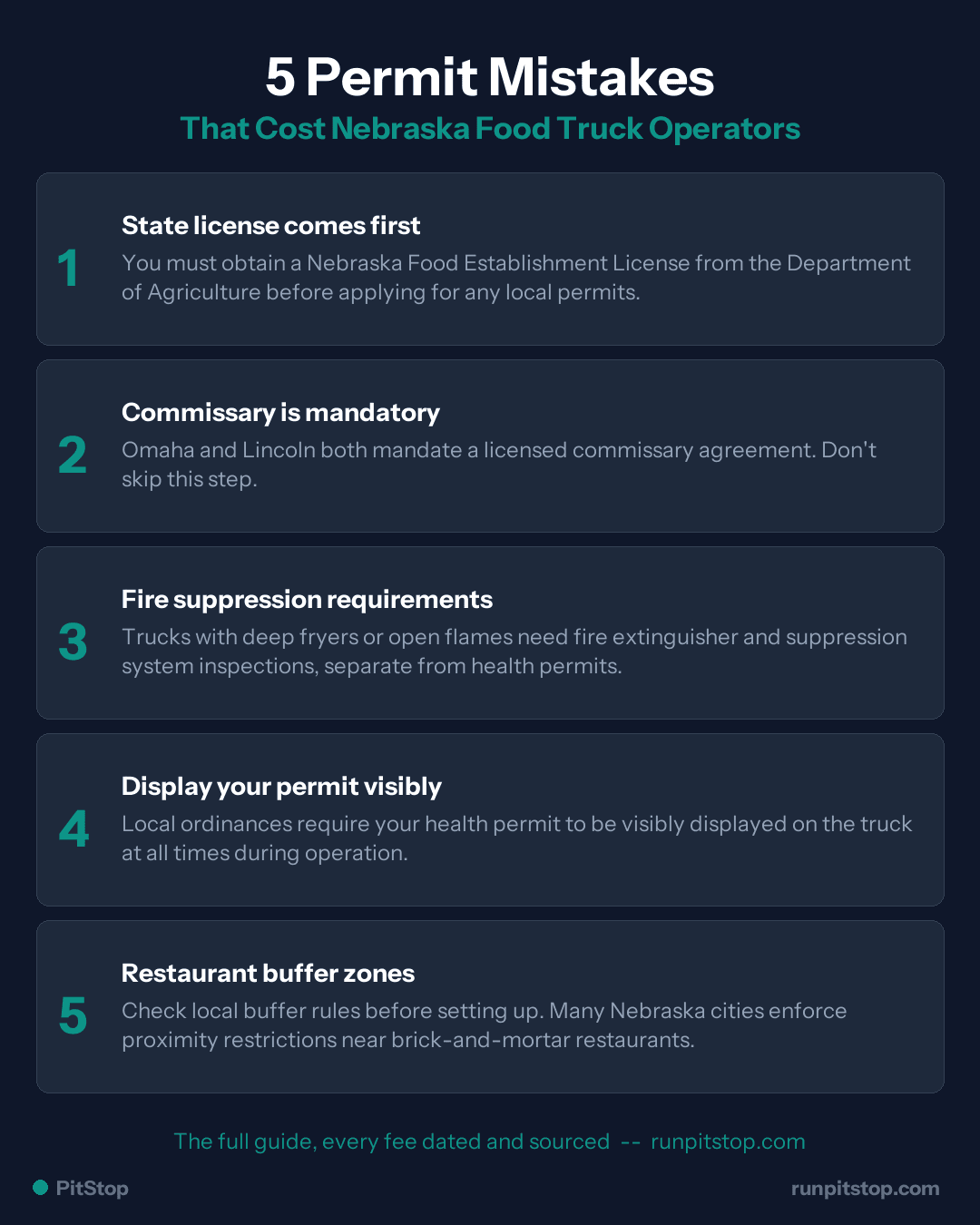
Common Pitfalls for Nebraska Operators
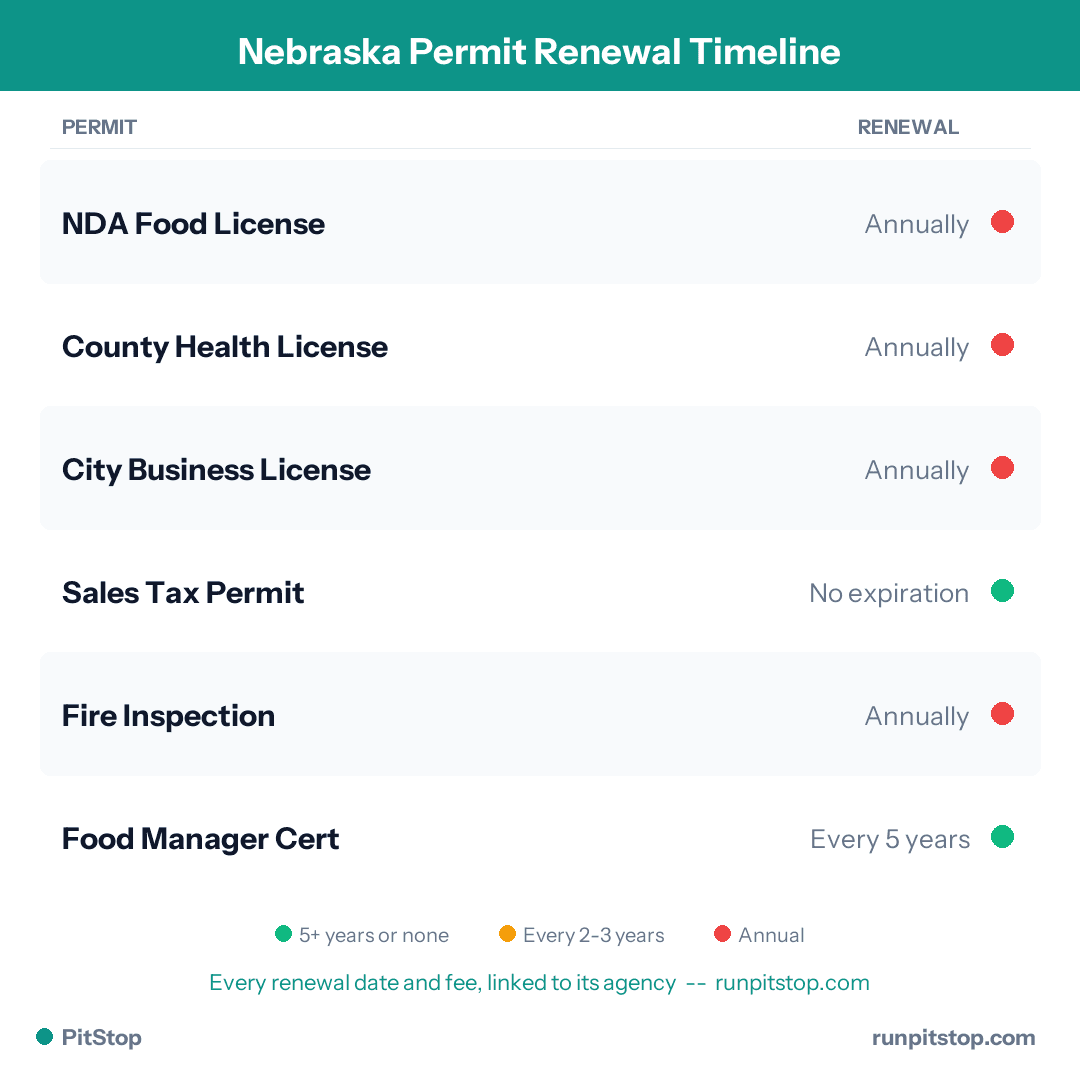
Renewal Timeline at a Glance
| Permit | Typical Renewal |
|---|---|
| Health/Food Service Permit | Annually |
| Business License | Annually |
| Food Handler Card | Varies by jurisdiction |
| Food Manager Certification | Every 5 years |
| Fire Inspection | Annually |
| Commissary Agreement | Annually (or per contract) |
Before you apply
Verify every fee in this guide with the issuing agency before you pay it; fee schedules change mid-year and the agency's own page is the only number that counts. Run your first few events through the per-event profit calculator, and start the paperwork 3–4 months before opening day: inspection slots, commissary letters and certifications take longer than the application itself.