The Minnesota State Fair is the largest state fair in the US by daily attendance, and it's a food-on-a-stick paradise - but Minnesota's food truck opportunity extends far beyond 12 days in August. The Twin Cities' diverse population and vibrant food culture support a year-round (yes, even in winter) mobile food scene.
Minnesota's food truck scene is centered on the Twin Cities (Minneapolis and St. Paul), with a diverse range of cuisines reflecting the state's Somali, Hmong, Latino, and Scandinavian communities. Hotdish, walleye tacos, Jucy Lucy burgers, and global street food are popular truck offerings. The Minneapolis Skyway system and indoor food truck events help operators survive the brutal winters. Rochester (Mayo Clinic) and Duluth have smaller but growing scenes.
Important: Always verify current fees and requirements directly with the relevant agencies. This guide is a starting point for your research, not a substitute for official guidance.
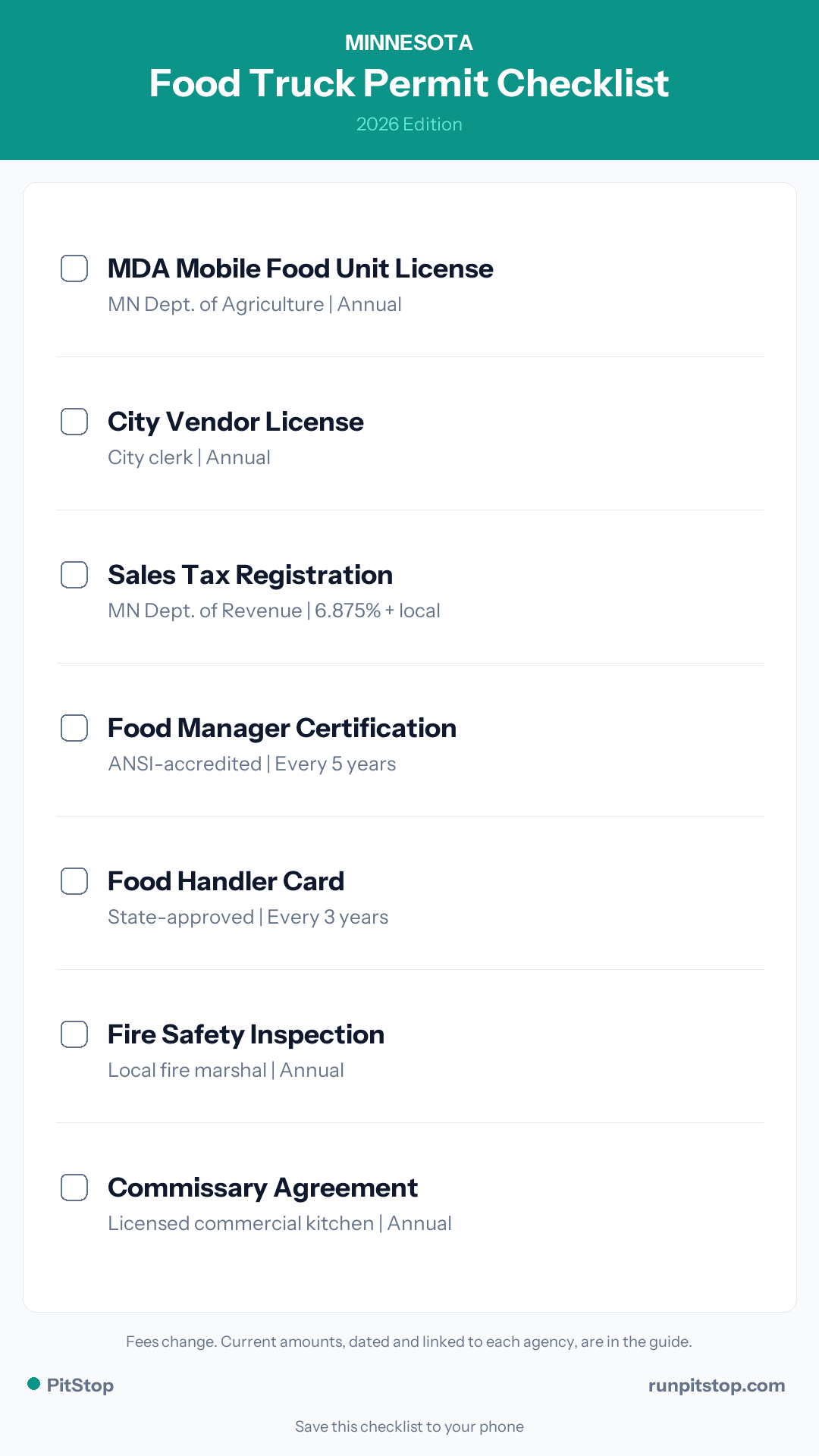
What Makes Minnesota Unique
Minnesota's food truck licensing is handled by the Minnesota Department of Agriculture (not the Health Department), which is unusual. The MDA license provides statewide food safety coverage, but operators still need separate city permits. Minnesota's diverse immigrant communities (Somali, Hmong, Karen) have created unique food truck niches that are gaining national attention. The Minnesota State Fair serves over 2 million people in 12 days and is one of the most coveted food vending events in the country.
Your next steps
Most operators sort these out before their first event.
Get food truck insurance
General liability is what most events require. Get a quote in a few minutes.
Get a quoteFinance your truck or equipment
Compare equipment and working-capital options, with a soft check to start.
See financing optionsAffiliate partners: PitStop may earn a commission at no extra cost to you. How this works.
State-Level Requirements
1. Mobile Food Unit License
The Minnesota Department of Agriculture (MDA) - Food and Feed Safety Division oversees food safety and mobile food unit permitting in Minnesota.
- Where to apply: Minnesota Department of Agriculture (MDA) - Food and Feed Safety Division website
- Permit fee: $150–$400
- Renewal: Annually (verify with your local health department)
2. Sales Tax Registration
Register with the Minnesota Department of Revenue to collect and remit sales tax.
- Sales tax rate: 6.875% state + local (total 7–8.875%)
- Cost to register: Free
3. Food Handler Certification
Minnesota requires food handlers to complete an approved food safety training program.
- Cost: $10–$15
- Renewal: Every 3 years
- Who needs it: Every person who handles, prepares, or serves food
4. Food Manager Certification
Minnesota requires at least one Certified Food Protection Manager on-site during operating hours.
- Approved exams: ServSafe, Prometric, or other nationally accredited programs
- Renewal: Every 5 years
- Cost: Typically $80–$180 depending on provider
5. Business Registration
- LLC or Corporation: File with the Minnesota Secretary of State
- Sole Proprietorship: Register your assumed business name (DBA) with the county clerk
- Federal EIN: Free from the IRS - required for tax filing, hiring, and opening a business bank account
Commissary Requirements
Most areas in Minnesota require a commissary agreement - a licensed commercial kitchen where you prep food, clean equipment, and store supplies. Minnesota requires mobile food units to have an approved commissary or servicing area for food preparation, cleaning, water supply, and waste disposal. The MDA verifies the commissary arrangement during licensing.
Your commissary must be licensed and in good standing. You'll typically need a commissary agreement letter for your permit application.
City-Specific Requirements
Minneapolis
Minneapolis has a robust food truck scene, with trucks operating in the North Loop, Uptown, and near the US Bank Stadium. The city requires a mobile food vendor license in addition to the MDA state license. Minneapolis has food truck-friendly policies, including designated lunch zones and partnerships with the park board for locations in city parks. The city's diverse population supports a wide range of cuisines.
- Permit fees: $300–$500
St. Paul
St. Paul has its own food truck permitting process, separate from Minneapolis. The city requires a vendor license and has designated food truck zones, including locations near the State Capitol and in Lowertown. St. Paul's food truck regulations have become more welcoming in recent years. The Minnesota State Fair (held in Falcon Heights, bordering St. Paul) is the single biggest annual food event.
- Permit fees: $200–$400
Rochester
Rochester's Mayo Clinic campus creates unique food truck demand - patients, visitors, and medical professionals need diverse food options. Olmsted County handles local permits alongside the MDA state license. The city has been increasingly food truck-friendly as part of the Destination Medical Center development project.
- Permit fees: $150–$300
Duluth
Duluth is a summer tourism destination with strong seasonal food truck demand, especially along the Lakewalk and Canal Park. The city requires a local vendor permit. The short but busy tourist season (June–September) concentrates revenue into a few months.
- Permit fees: $100–$250
Each jurisdiction handles permitting independently - contact your local health department for specific requirements and fees.
Fire Safety
If your truck uses propane, deep fryers, or open flame cooking, you'll need:
- A fire suppression system (hood and Ansul system) for grease-producing equipment
- Fire extinguisher (Class K for kitchen fires, Class ABC for general)
- Fire safety inspection from the local fire marshal
- Propane tank certification and proper ventilation
Cost for fire suppression system: Typically $3,000–$6,000+ depending on your setup. Get multiple quotes from certified installers.
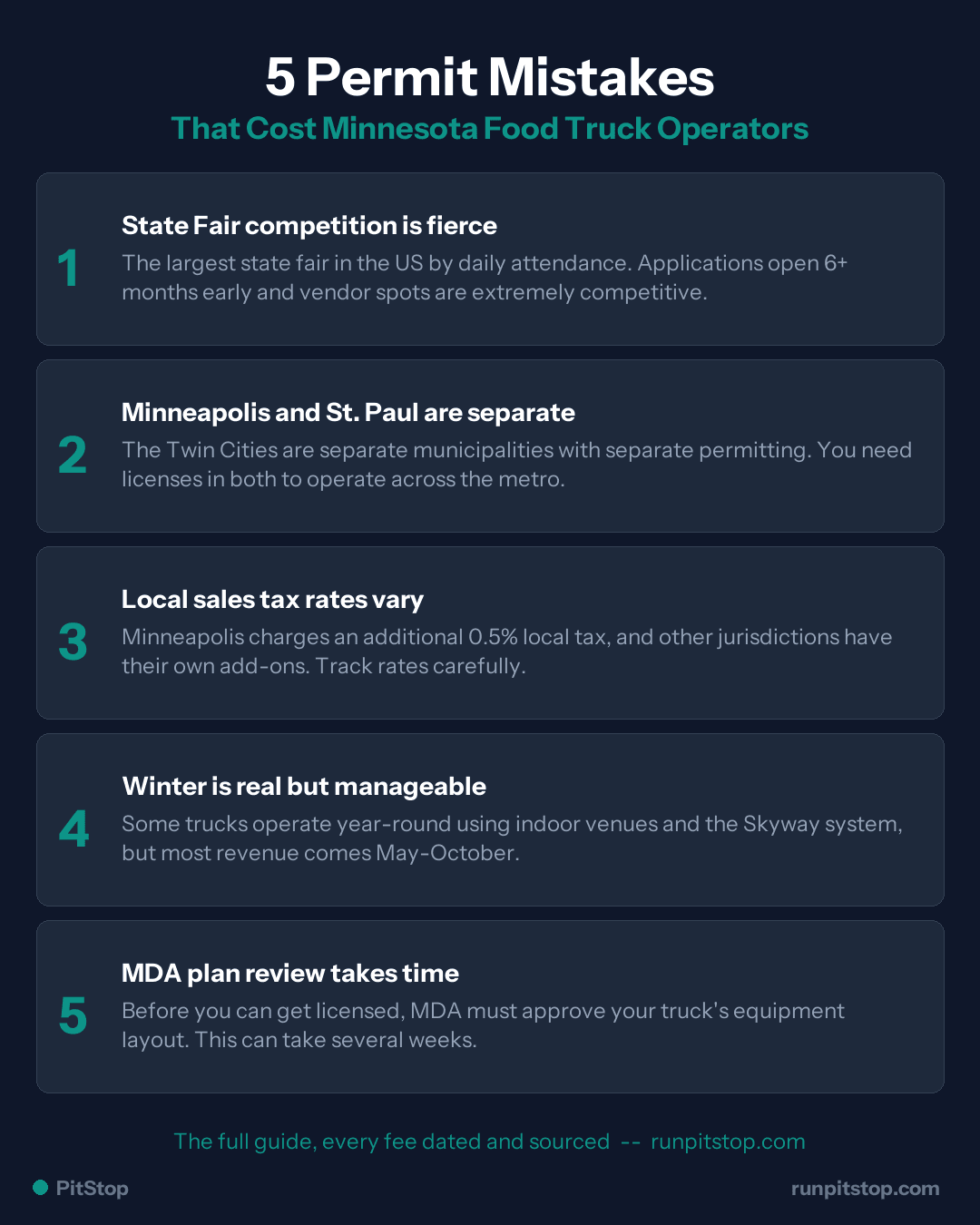
Common Pitfalls for Minnesota Operators
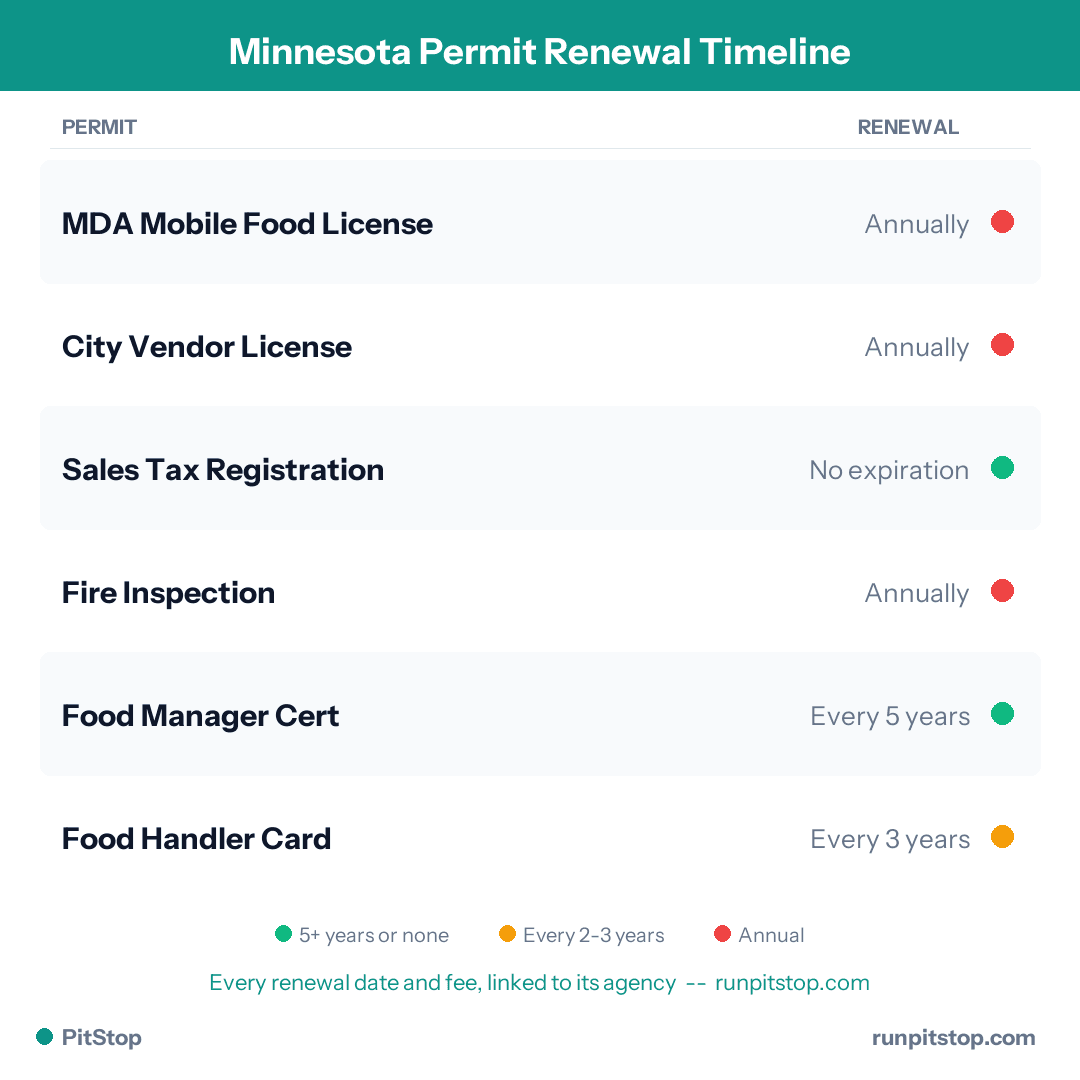
Renewal Timeline at a Glance
| Permit | Typical Renewal |
|---|---|
| MDA Mobile Food Unit License | Annually |
| City Vendor License | Annually |
| Sales Tax Registration | No expiration (ongoing filing) |
| Fire Safety Inspection | Annually |
Before you apply
Verify every fee in this guide with the issuing agency before you pay it; fee schedules change mid-year and the agency's own page is the only number that counts. Run your first few events through the per-event profit calculator, and start the paperwork 3–4 months before opening day: inspection slots, commissary letters and certifications take longer than the application itself.