Maine's food truck identity is built on one iconic item - the lobster roll - but Portland's James Beard Award-winning food scene has created demand for everything from wood-fired pizza trucks to Korean-Cajun fusion. With summer tourism flooding the coast, the Pine Tree State offers a short but intensely profitable operating window.
Maine's food truck scene is concentrated in Portland, which has a nationally recognized food culture, and along the coastal tourist corridor from Kittery to Bar Harbor. Lobster rolls, clam chowder, and seafood are the obvious draws, but Portland's diverse culinary scene supports creative concepts. Summer tourism (June–September) drives the vast majority of revenue. Inland markets like Bangor and Lewiston-Auburn are smaller but growing.
Important: Always verify current fees and requirements directly with the relevant agencies. This guide is a starting point for your research, not a substitute for official guidance.
What Makes Maine Unique
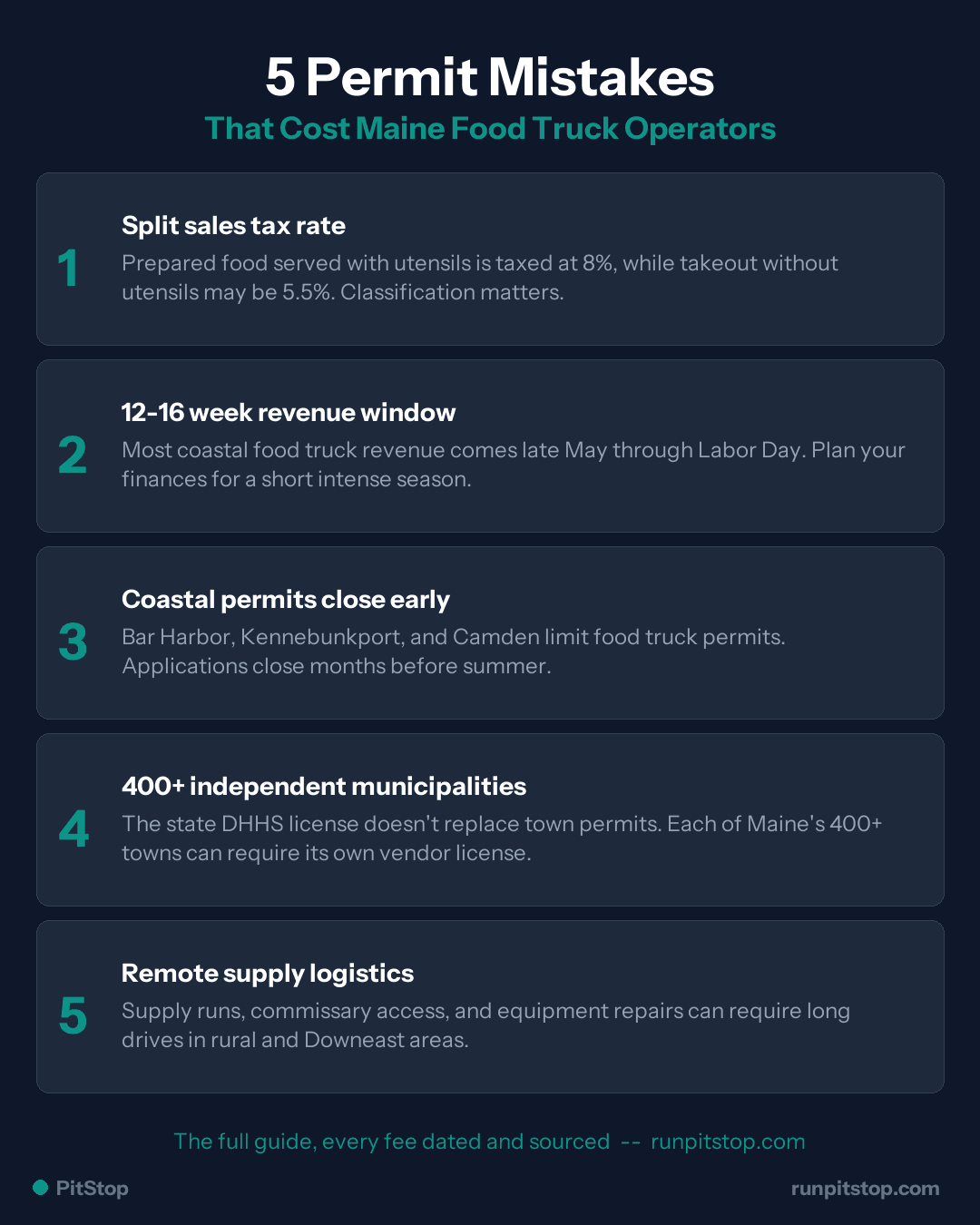
Maine's food truck regulatory landscape is highly decentralized - municipalities have broad authority to set their own permitting rules, and there is no single state-level mobile food vendor license. The state's food sovereignty movement has led to some towns adopting local food freedom ordinances, though these primarily apply to farm-direct sales and do not exempt food trucks from health inspections. Maine also has relatively lenient commissary requirements compared to other states, with some jurisdictions allowing fully self-contained trucks to operate without a separate commissary.
Your next steps
Most operators sort these out before their first event.
Get food truck insurance
General liability is what most events require. Get a quote in a few minutes.
Get a quoteFinance your truck or equipment
Compare equipment and working-capital options, with a soft check to start.
See financing optionsAffiliate partners: PitStop may earn a commission at no extra cost to you. How this works.
State-Level Requirements
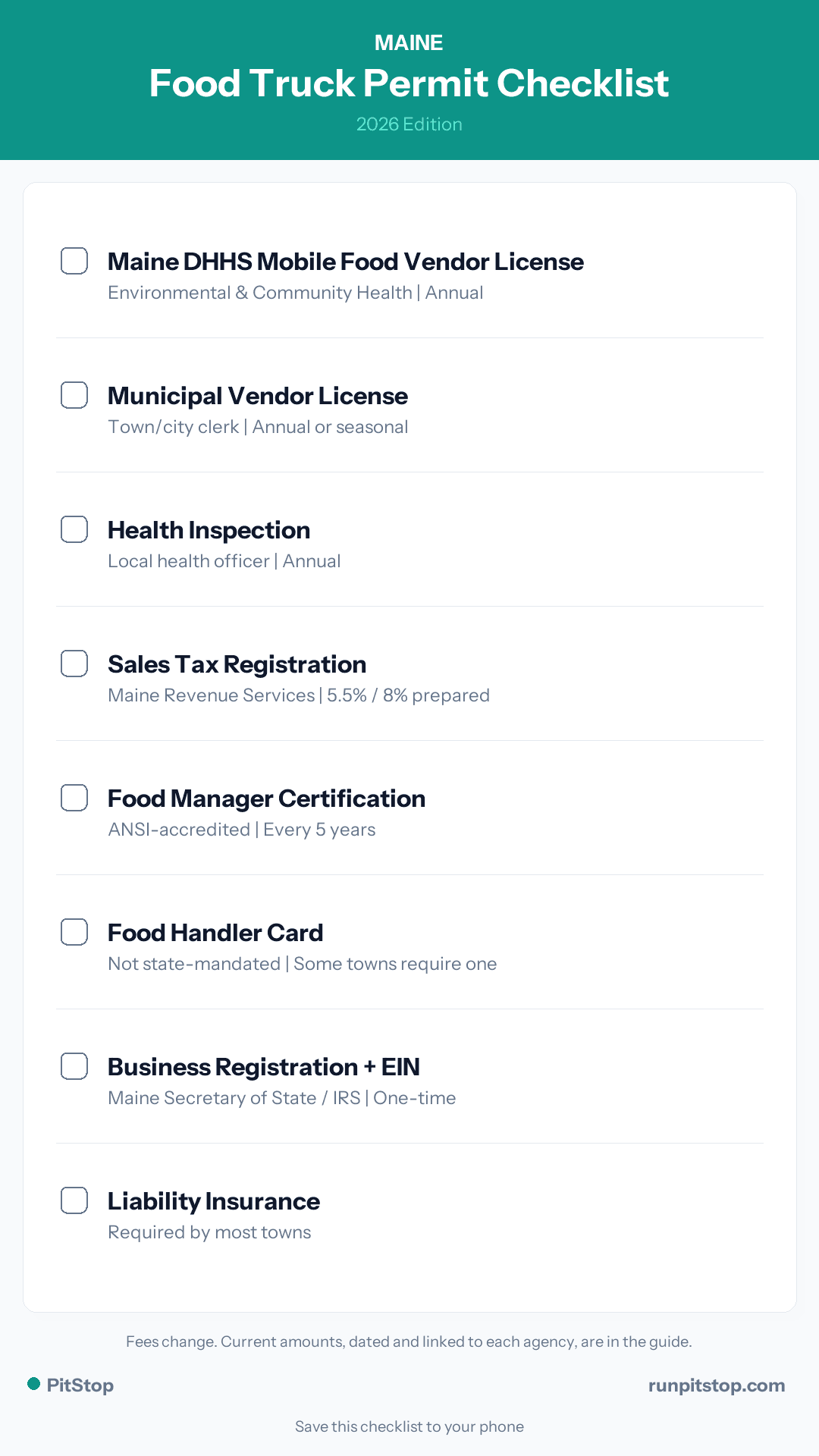
1. Mobile Food Vendor License
The Maine Department of Health and Human Services - Division of Environmental and Community Health oversees food safety and mobile food unit permitting in Maine.
- Where to apply: Maine Department of Health and Human Services - Division of Environmental and Community Health website
- Permit fee: $50–$200
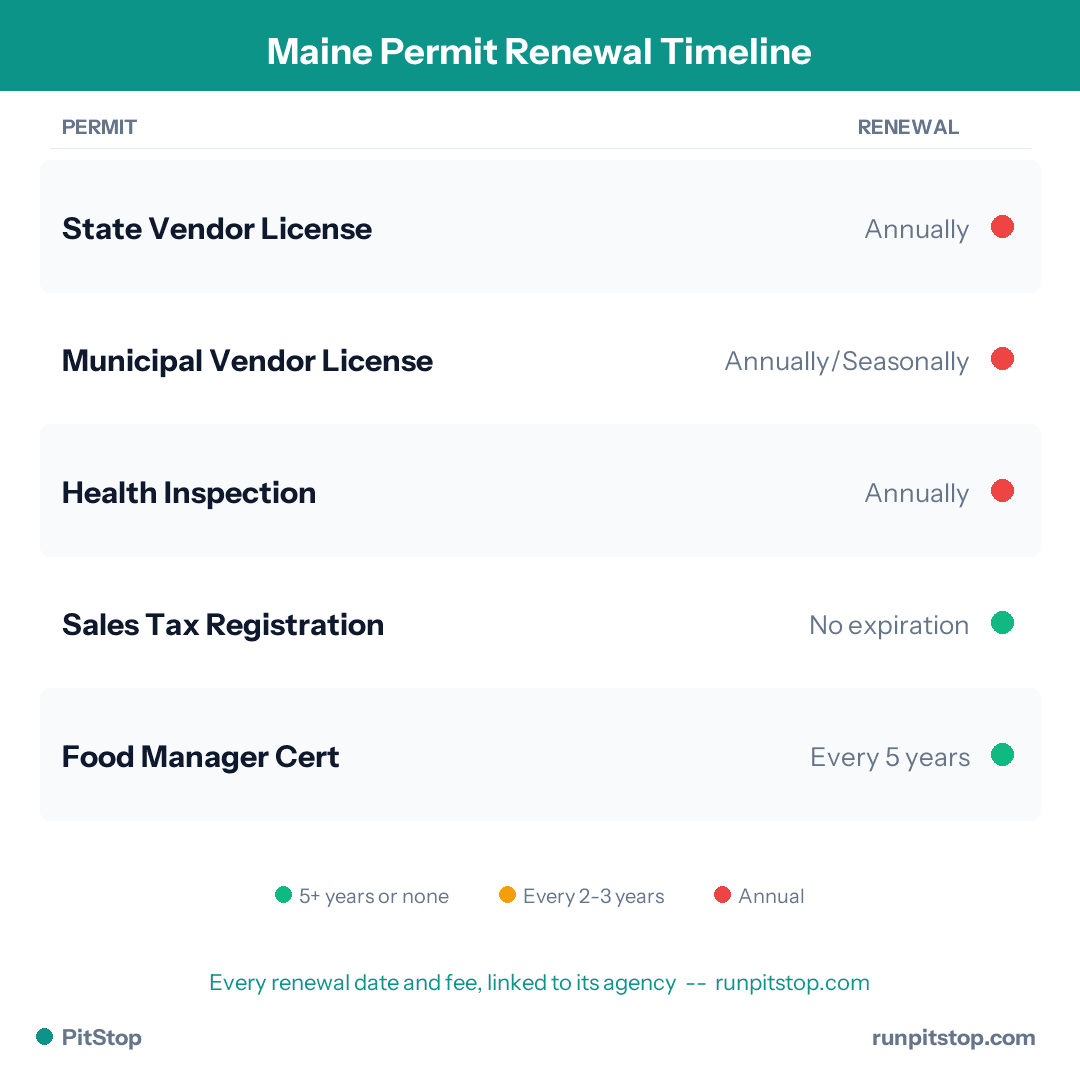
- Renewal: Annually (verify with your local health department)
2. Sales Tax Registration
Register with the Maine Revenue Services to collect and remit sales tax.
- Sales tax rate: 5.5% (8% on prepared food served with eating utensils)
- Cost to register: Free
3. Food Handler Certification
Maine does not have a mandatory statewide food handler card requirement, but many local jurisdictions require one. Check with your local health department.
4. Food Manager Certification
Maine requires at least one Certified Food Protection Manager on-site during operating hours.
- Approved exams: ServSafe, Prometric, or other nationally accredited programs
- Renewal: Every 5 years
- Cost: Typically $80–$180 depending on provider
5. Business Registration
- LLC or Corporation: File with the Maine Secretary of State
- Sole Proprietorship: Register your assumed business name (DBA) with the county clerk
- Federal EIN: Free from the IRS - required for tax filing, hiring, and opening a business bank account
Commissary Requirements
Maine does not have a blanket statewide commissary requirement, but many local jurisdictions do require one. Maine does not strictly require a commissary at the state level. However, many municipalities and local health officers require a commissary or approved servicing area. Self-contained trucks with adequate water, waste, and cleaning capabilities may be exempt in some jurisdictions.
Your commissary must be licensed and in good standing. You'll typically need a commissary agreement letter for your permit application.
City-Specific Requirements
Portland
Portland is Maine's food truck hub and one of the best small-city food scenes in America. The city requires a mobile vendor license from City Hall and a health inspection. The Old Port, waterfront, and East Bayside are popular food truck areas. Competition is fierce, especially for seafood-focused trucks. The Portland Food Truck Pod on Congress Street is a popular gathering spot.
- Permit fees: $100–$300
Bar Harbor
Bar Harbor's Acadia National Park tourism creates massive summer demand. The town requires a seasonal vendor permit and has strict location restrictions on Main Street and the village green. Permits are limited and competitive - apply by January for summer season.
- Permit fees: $150–$400 (seasonal)
Bangor
Bangor has a smaller food truck scene but serves as a hub for inland Maine. The city requires a vendor license and health inspection. The waterfront concert venue and downtown events create periodic spikes in demand. Lower competition and costs make it a good testing ground.
- Permit fees: $50–$150
Each jurisdiction handles permitting independently - contact your local health department for specific requirements and fees.
Fire Safety
If your truck uses propane, deep fryers, or open flame cooking, you'll need:
- A fire suppression system (hood and Ansul system) for grease-producing equipment
- Fire extinguisher (Class K for kitchen fires, Class ABC for general)
- Fire safety inspection from the local fire marshal
- Propane tank certification and proper ventilation
Cost for fire suppression system: Typically $3,000–$6,000+ depending on your setup. Get multiple quotes from certified installers.
Common Pitfalls for Maine Operators
Renewal Timeline at a Glance
| Permit | Typical Renewal |
|---|---|
| Municipal Vendor License | Annually or seasonally |
| Health Inspection | Annually |
| Sales Tax Registration | No expiration (ongoing filing) |
Before you apply
Verify every fee in this guide with the issuing agency before you pay it; fee schedules change mid-year and the agency's own page is the only number that counts. Run your first few events through the per-event profit calculator, and start the paperwork 3–4 months before opening day: inspection slots, commissary letters and certifications take longer than the application itself.