In a state where food IS the culture, launching a food truck in Louisiana means competing with some of the most celebrated culinary traditions in America. New Orleans alone attracts 18 million tourists annually, and Mardi Gras, Jazz Fest, and crawfish season create a year-round carnival of opportunity - with equally colorful regulations.
Louisiana's food truck scene is inseparable from its culinary identity. New Orleans leads with trucks serving po'boys, gumbo, crawfish, beignets, and Creole fusion. Baton Rouge and Lafayette (the heart of Cajun country) have growing scenes. Festival culture (Mardi Gras, Jazz Fest, Festival International) creates massive seasonal revenue peaks. The state's laissez-faire reputation doesn't quite extend to food regulation - health and safety requirements are thorough.
Important: Always verify current fees and requirements directly with the relevant agencies. This guide is a starting point for your research, not a substitute for official guidance.
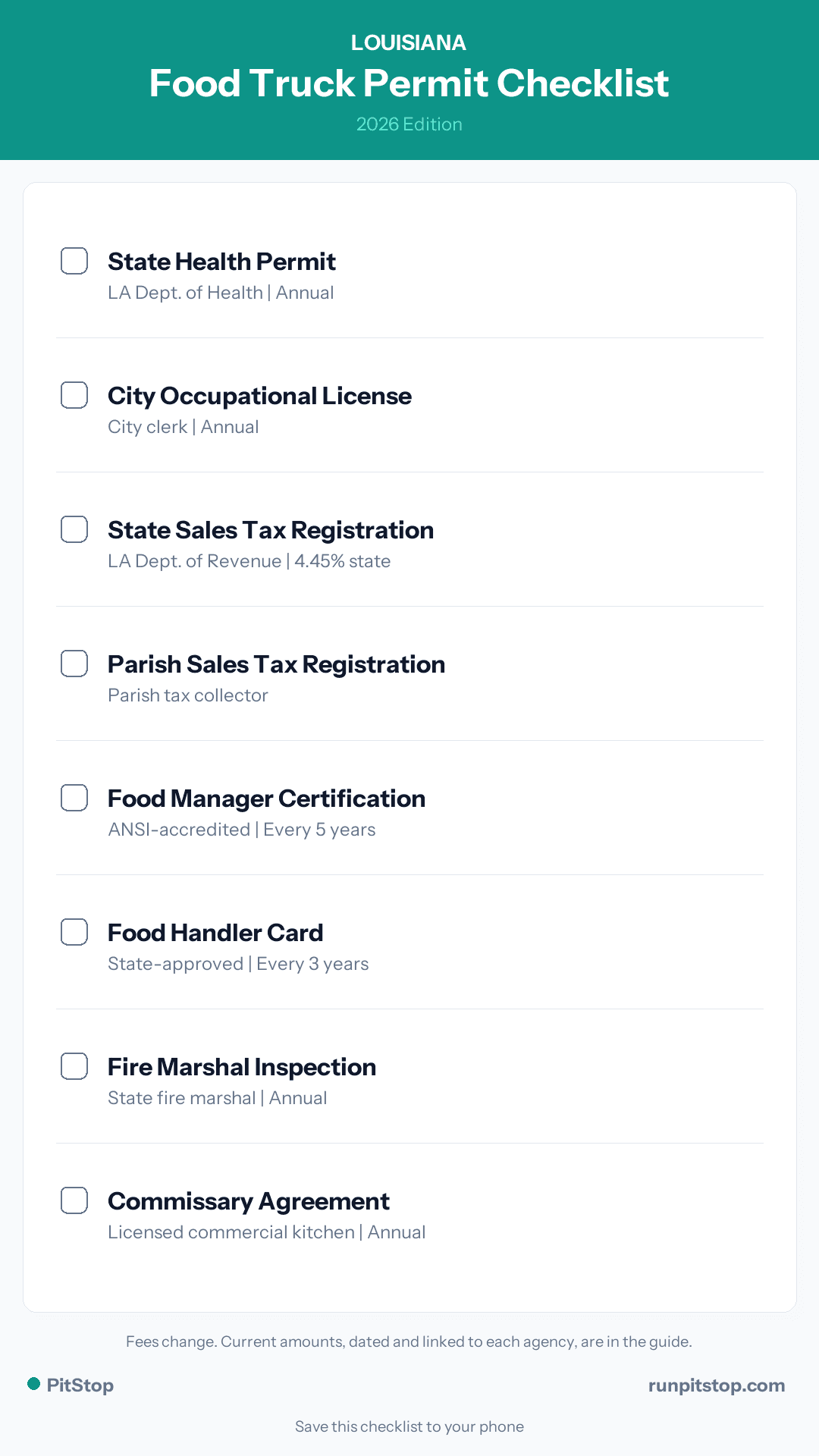
What Makes Louisiana Unique
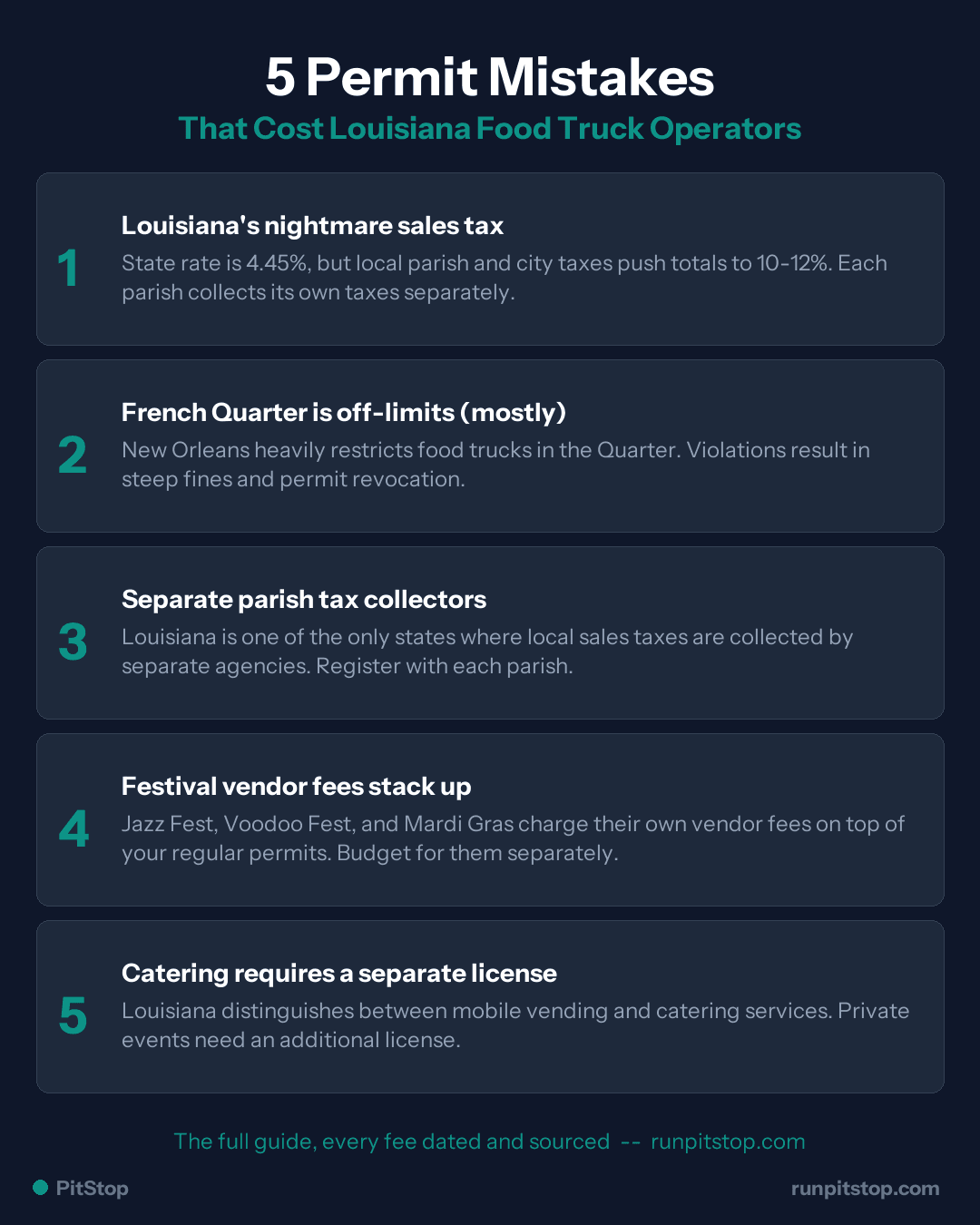
Louisiana's sales tax system is one of the most complex in the US - there are 64 parishes, many with their own tax collection offices, and rates vary significantly. The Louisiana Sales and Use Tax Commission for Remote Sellers has simplified some multi-parish filing, but food truck operators still face more tax compliance work than in most states. Louisiana also has a strong cottage food law (the 'Homemade Food Freedom Act'), but it does not extend to mobile food units. The state's festival culture is unmatched, making event vending a primary revenue strategy.
Your next steps
Most operators sort these out before their first event.
Get food truck insurance
General liability is what most events require. Get a quote in a few minutes.
Get a quoteFinance your truck or equipment
Compare equipment and working-capital options, with a soft check to start.
See financing optionsAffiliate partners: PitStop may earn a commission at no extra cost to you. How this works.
State-Level Requirements
1. Mobile Food Establishment Permit
The Louisiana Department of Health - Office of Public Health, Sanitarian Services oversees food safety and mobile food unit permitting in Louisiana.
- Where to apply: Louisiana Department of Health - Office of Public Health, Sanitarian Services website
- Permit fee: $100–$350
- Renewal: Annually (verify with your local health department)
2. Sales Tax Registration
Register with the Louisiana Department of Revenue + parish/city tax authorities to collect and remit sales tax.
- Sales tax rate: 4.45% state + local (total 8–12%)
- Cost to register: Free
3. Food Handler Certification
Louisiana requires food handlers to complete an approved food safety training program.
- Cost: $10–$15
- Renewal: Every 3 years
- Who needs it: Every person who handles, prepares, or serves food
4. Food Manager Certification
Louisiana requires at least one Certified Food Protection Manager on-site during operating hours.
- Approved exams: ServSafe, Prometric, or other nationally accredited programs
- Renewal: Every 5 years
- Cost: Typically $80–$180 depending on provider
5. Business Registration
- LLC or Corporation: File with the Louisiana Secretary of State
- Sole Proprietorship: Register your assumed business name (DBA) with the county clerk
- Federal EIN: Free from the IRS - required for tax filing, hiring, and opening a business bank account
Commissary Requirements
Most areas in Louisiana require a commissary agreement - a licensed commercial kitchen where you prep food, clean equipment, and store supplies. Louisiana requires mobile food establishments to operate from a licensed commissary for food storage, preparation, cleaning, and waste disposal. In New Orleans, commissary options are plentiful, but in rural parishes, operators may need to travel further for approved facilities.
Your commissary must be licensed and in good standing. You'll typically need a commissary agreement letter for your permit application.
City-Specific Requirements
New Orleans
New Orleans is Louisiana's premier food truck market, with trucks operating in the French Quarter fringes, Frenchmen Street, uptown, and at festivals. The city requires a city occupational license, Orleans Parish health permit, and a mobile vendor permit. The French Quarter has strict restrictions on food trucks - most trucks operate in adjacent neighborhoods. Mardi Gras and Jazz Fest require separate special event permits.
- Permit fees: $300–$600
Baton Rouge
Baton Rouge has a growing food truck scene, driven by LSU and the state government complex. East Baton Rouge Parish health permits are required. The city has food truck parks and regular rally events. Government Center and the university corridor are prime lunch locations.
- Permit fees: $150–$300
Lafayette
Lafayette is the capital of Cajun country, and food trucks here must live up to high culinary expectations. Lafayette Parish health permits are required. The city is welcoming to food trucks, especially around Festival International and the downtown arts district.
- Permit fees: $100–$250
Each jurisdiction handles permitting independently - contact your local health department for specific requirements and fees.
Fire Safety
If your truck uses propane, deep fryers, or open flame cooking, you'll need:
- A fire suppression system (hood and Ansul system) for grease-producing equipment
- Fire extinguisher (Class K for kitchen fires, Class ABC for general)
- Fire safety inspection from the local fire marshal
- Propane tank certification and proper ventilation
Cost for fire suppression system: Typically $3,000–$6,000+ depending on your setup. Get multiple quotes from certified installers.
Common Pitfalls for Louisiana Operators
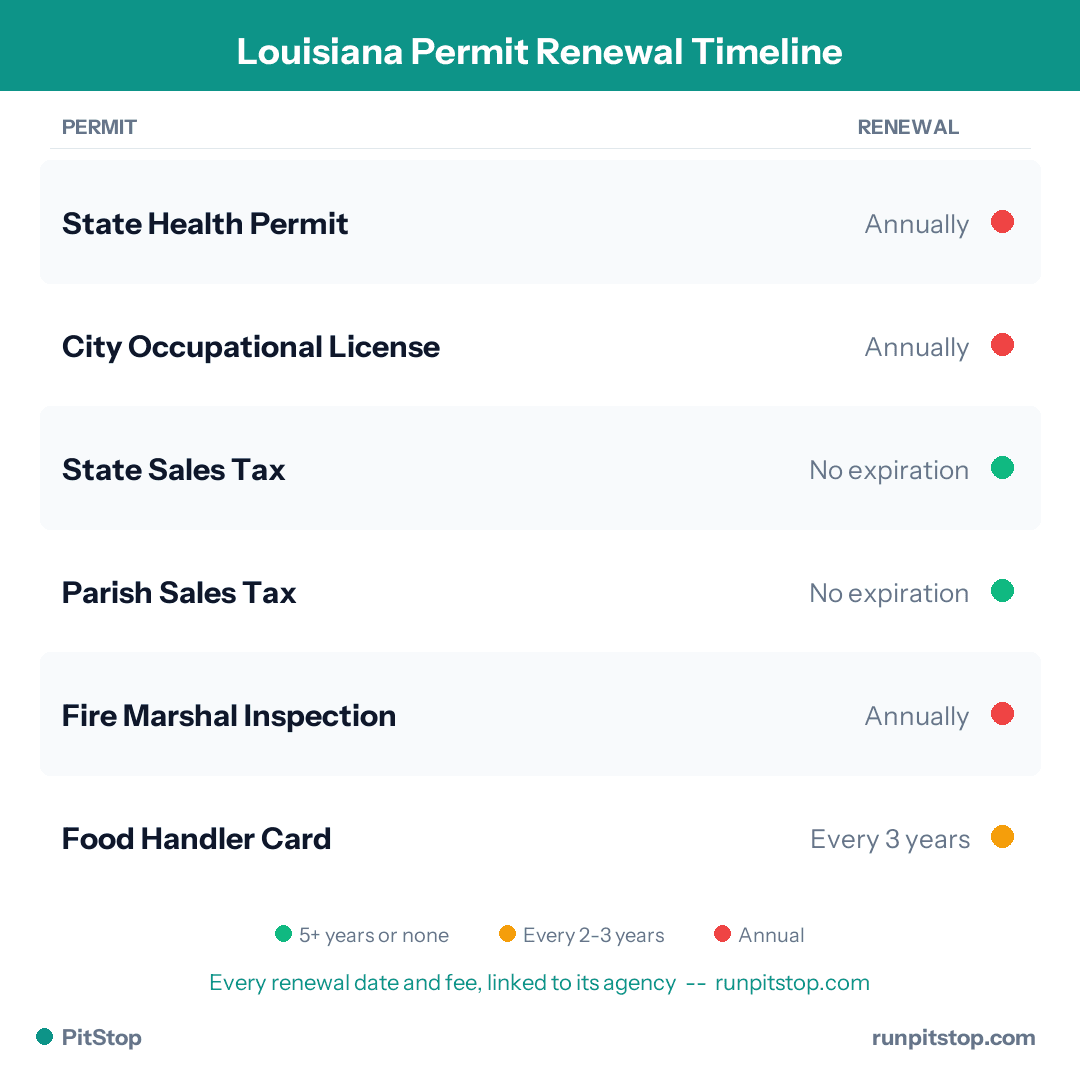
Renewal Timeline at a Glance
| Permit | Typical Renewal |
|---|---|
| State Health Permit | Annually |
| City Occupational License | Annually |
| Sales Tax Registration (state) | No expiration (ongoing filing) |
| Parish Sales Tax Registration | No expiration (ongoing filing) |
| Fire Marshal Inspection | Annually |
Before you apply
Verify every fee in this guide with the issuing agency before you pay it; fee schedules change mid-year and the agency's own page is the only number that counts. Run your first few events through the per-event profit calculator, and start the paperwork 3–4 months before opening day: inspection slots, commissary letters and certifications take longer than the application itself.