Kansas sits at the heart of America's BBQ belt, and food trucks here compete with - and complement - world-famous smokehouses in Kansas City. With a low cost of entry and a regulatory environment that's friendlier than neighboring Missouri, the Sunflower State is a smart launch pad for BBQ and beyond.
Kansas's food truck scene is strongest in the Kansas City metro (Kansas side), Wichita, and Lawrence. BBQ is king, but tacos, comfort food, and fusion concepts are growing. Wichita has a particularly vibrant food truck community with regular events. The state's BBQ competition circuit provides additional revenue streams for truck operators. College towns like Lawrence and Manhattan (K-State) offer reliable demand.
Important: Always verify current fees and requirements directly with the relevant agencies. This guide is a starting point for your research, not a substitute for official guidance.
What Makes Kansas Unique
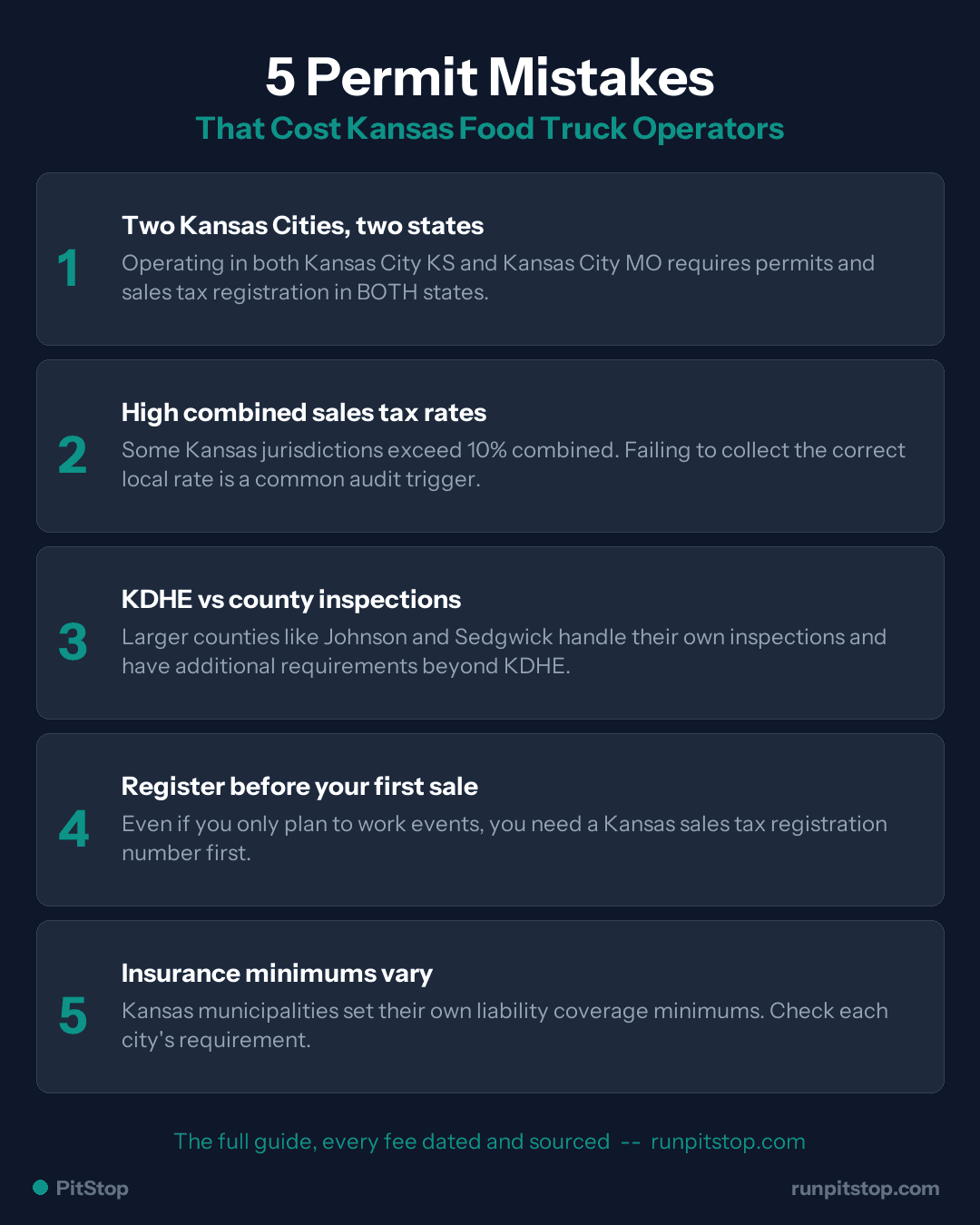
Kansas's proximity to Kansas City, Missouri means many operators work both sides of the state line, but this requires separate state permits, health inspections, and sales tax registrations. Kansas does not mandate food handler cards at the state level, though some counties require them. The state's BBQ competition circuit (KCBS-sanctioned events) provides a unique revenue stream for food truck operators who can compete and vend simultaneously.
Your next steps
Most operators sort these out before their first event.
Get food truck insurance
General liability is what most events require. Get a quote in a few minutes.
Get a quoteFinance your truck or equipment
Compare equipment and working-capital options, with a soft check to start.
See financing optionsAffiliate partners: PitStop may earn a commission at no extra cost to you. How this works.
State-Level Requirements
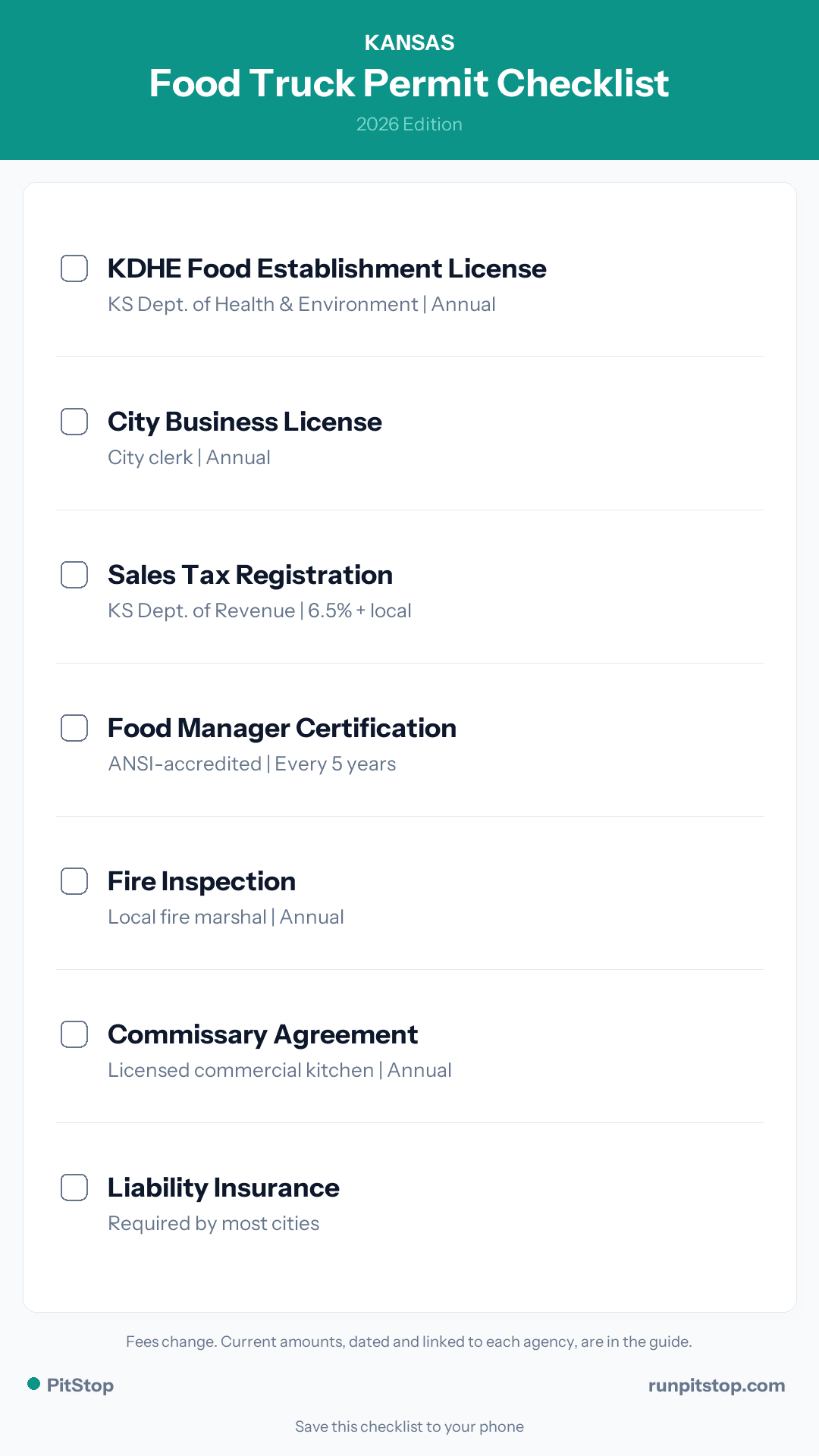
1. Mobile Food Establishment License
The Kansas Department of Health and Environment (KDHE) - Bureau of Community Health Systems oversees food safety and mobile food unit permitting in Kansas.
- Where to apply: Kansas Department of Health and Environment (KDHE) - Bureau of Community Health Systems website
- Permit fee: $100–$250
- Renewal: Annually (verify with your local health department)
2. Sales Tax Registration
Register with the Kansas Department of Revenue to collect and remit sales tax.
- Sales tax rate: 6.5% state + local (total 8–11%)
- Cost to register: Free
3. Food Handler Certification
Kansas does not have a mandatory statewide food handler card requirement, but many local jurisdictions require one. Check with your local health department.
4. Food Manager Certification
Kansas requires at least one Certified Food Protection Manager on-site during operating hours.
- Approved exams: ServSafe, Prometric, or other nationally accredited programs
- Renewal: Every 5 years
- Cost: Typically $80–$180 depending on provider
5. Business Registration
- LLC or Corporation: File with the Kansas Secretary of State
- Sole Proprietorship: Register your assumed business name (DBA) with the county clerk
- Federal EIN: Free from the IRS - required for tax filing, hiring, and opening a business bank account
Commissary Requirements
Most areas in Kansas require a commissary agreement - a licensed commercial kitchen where you prep food, clean equipment, and store supplies. Kansas requires mobile food establishments to operate from an approved commissary or servicing area. The commissary must be a licensed food establishment where the truck returns for cleaning, restocking, and waste disposal.
Your commissary must be licensed and in good standing. You'll typically need a commissary agreement letter for your permit application.
City-Specific Requirements
Kansas City (KS)
Kansas City, Kansas (Wyandotte County/Unified Government) has a growing food truck scene, especially in the Strawberry Hill and downtown areas. The Unified Government handles business licenses. Wyandotte County health permits are required. Proximity to Kansas City, MO creates a dual-market opportunity, but you need separate permits for each state.
- Permit fees: $100–$250
Wichita
Wichita has one of Kansas's most active food truck communities, with regular rallies and a food truck park. Sedgwick County handles health inspections. The city has streamlined its permitting process and is considered very food truck-friendly. The Riverfest and Wichita Open Streets events are major revenue opportunities.
- Permit fees: $100–$250
Lawrence
Lawrence is a vibrant college town (University of Kansas) with strong food truck demand. Douglas County health permits are required. The city has designated food truck zones near campus and along Massachusetts Street. Late-night service on game days is lucrative.
- Permit fees: $75–$200
Overland Park
Overland Park is part of the KC metro and has a growing suburban food truck market. Johnson County health permits are required - Johnson County has some of the most thorough inspection processes in the state. Corporate office parks create weekday lunch demand.
- Permit fees: $100–$250
Each jurisdiction handles permitting independently - contact your local health department for specific requirements and fees.
Fire Safety
If your truck uses propane, deep fryers, or open flame cooking, you'll need:
- A fire suppression system (hood and Ansul system) for grease-producing equipment
- Fire extinguisher (Class K for kitchen fires, Class ABC for general)
- Fire safety inspection from the local fire marshal
- Propane tank certification and proper ventilation
Cost for fire suppression system: Typically $3,000–$6,000+ depending on your setup. Get multiple quotes from certified installers.
Common Pitfalls for Kansas Operators
Renewal Timeline at a Glance
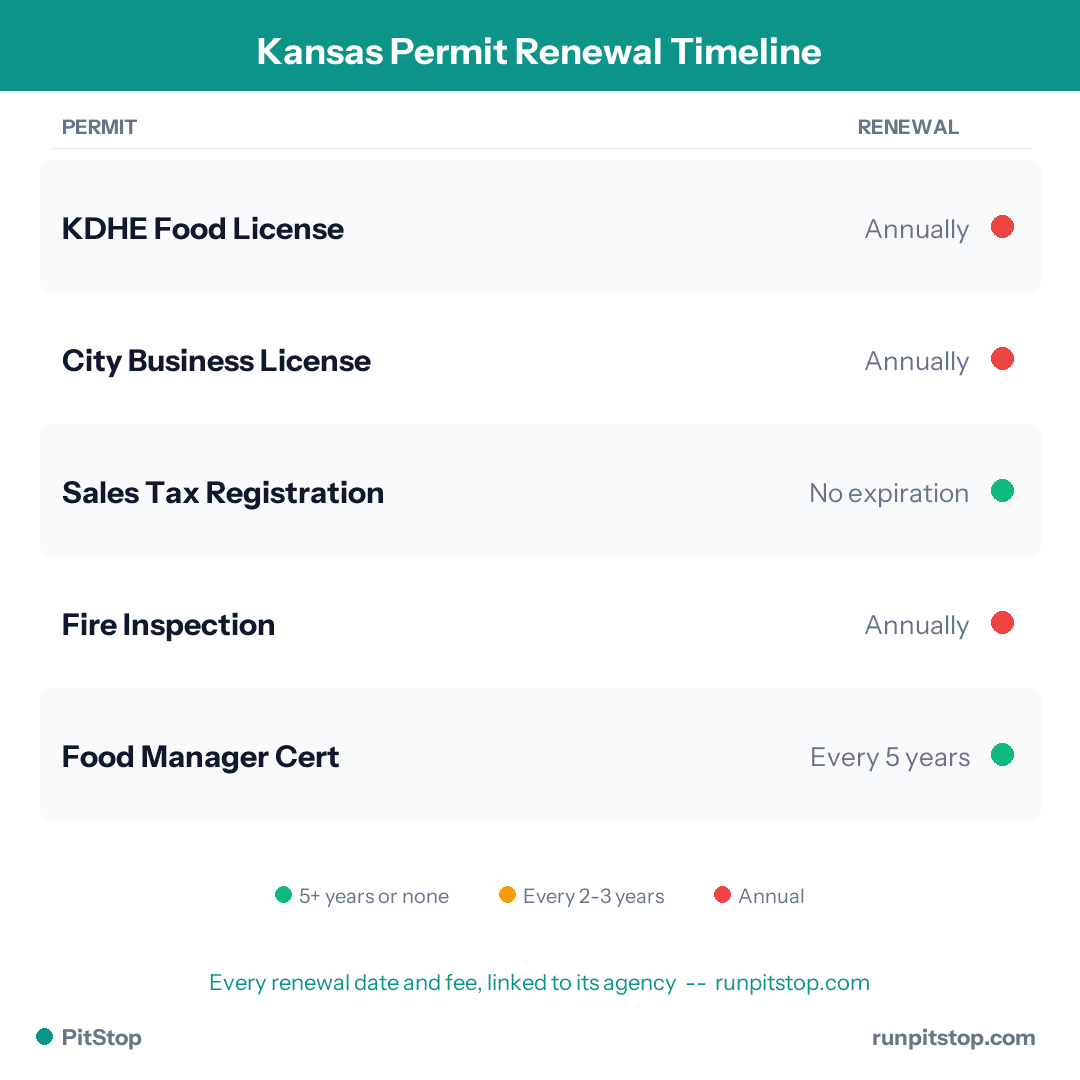
| Permit | Typical Renewal |
|---|---|
| KDHE Food Establishment License | Annually |
| City Business License | Annually |
| Sales Tax Registration | No expiration (ongoing filing) |
| Fire Inspection | Annually |
Before you apply
Verify every fee in this guide with the issuing agency before you pay it; fee schedules change mid-year and the agency's own page is the only number that counts. Run your first few events through the per-event profit calculator, and start the paperwork 3–4 months before opening day: inspection slots, commissary letters and certifications take longer than the application itself.