Indiana feeds over 300,000 visitors during the Indianapolis 500 weekend alone - and food trucks are a massive part of that. The Hoosier State's central location, low cost of living, and increasingly food-truck-friendly legislation make it a strong market for new operators.
Indiana's food truck scene is centered on Indianapolis, with a strong presence in Bloomington (IU), Fort Wayne, and the South Bend/Notre Dame area. Pork tenderloin sandwiches, BBQ, tacos, and comfort food are staples, with more diverse cuisines gaining ground in Indy. The Indianapolis Motor Speedway events, Indiana State Fair, and GenCon create major revenue spikes.
Important: Always verify current fees and requirements directly with the relevant agencies. This guide is a starting point for your research, not a substitute for official guidance.
What Makes Indiana Unique
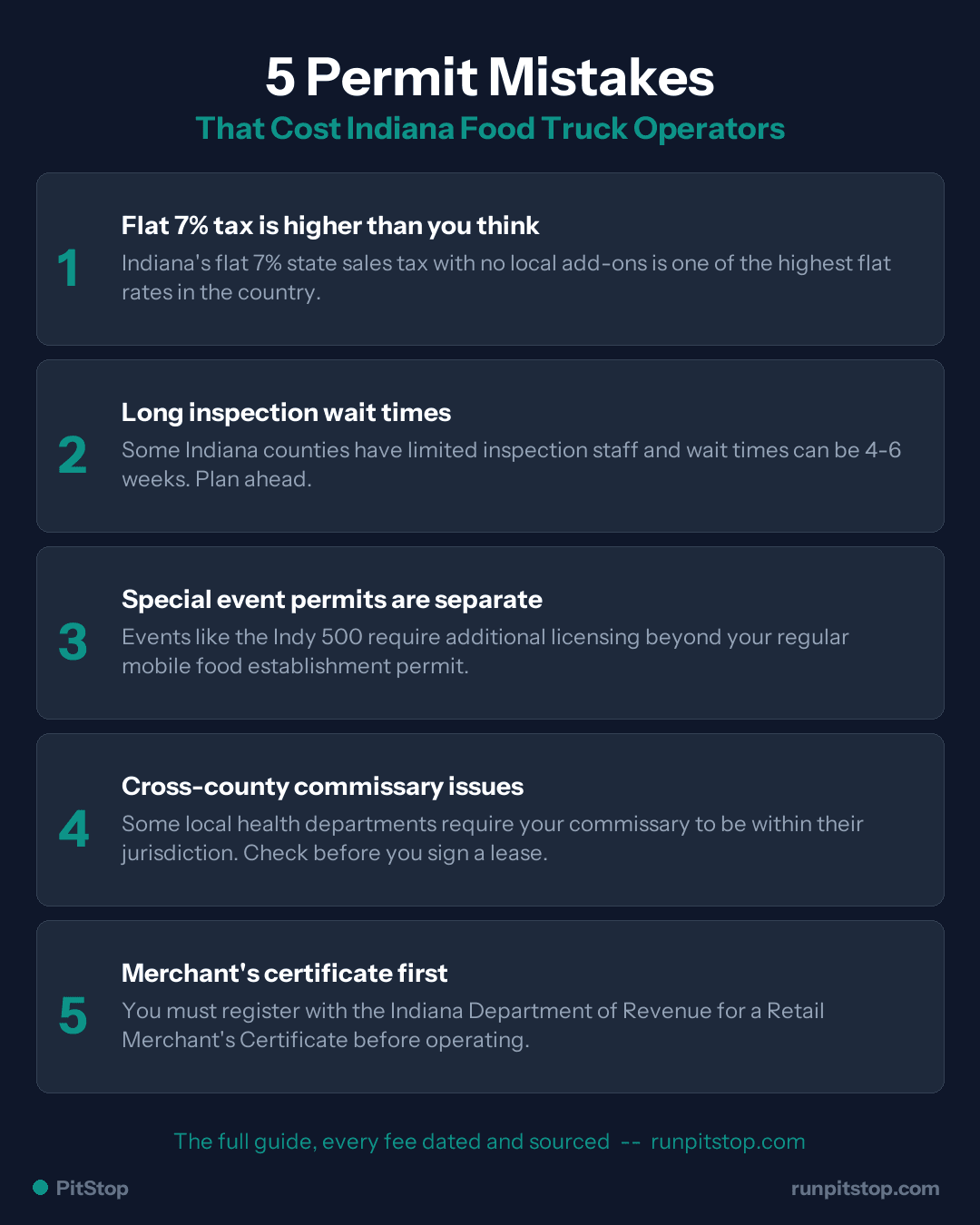
Indiana's flat 7% sales tax simplifies multi-city operations - your tax rate stays the same whether you're in Indianapolis, Fort Wayne, or a rural county fair. The state's central location and extensive highway system make it a natural base for operators who want to serve events across multiple states. Indiana also has a growing food hall and food truck park movement, particularly in Indianapolis.
Your next steps
Most operators sort these out before their first event.
Get food truck insurance
General liability is what most events require. Get a quote in a few minutes.
Get a quoteFinance your truck or equipment
Compare equipment and working-capital options, with a soft check to start.
See financing optionsAffiliate partners: PitStop may earn a commission at no extra cost to you. How this works.
State-Level Requirements
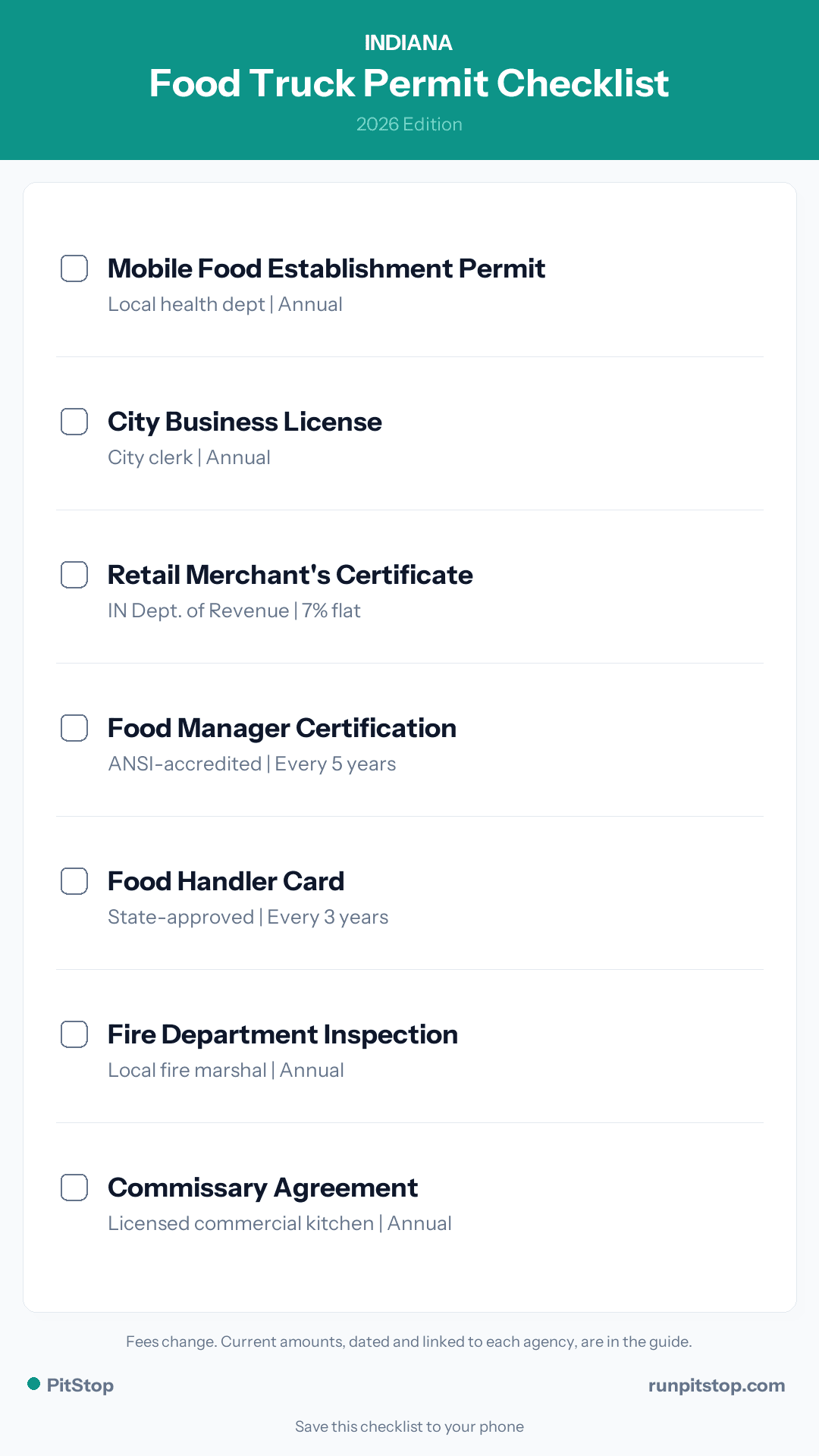
1. Mobile Food Establishment Permit
The Indiana State Department of Health (ISDH) - Food Protection Program oversees food safety and mobile food unit permitting in Indiana.
- Where to apply: Indiana State Department of Health (ISDH) - Food Protection Program website
- Permit fee: $100–$300
- Renewal: Annually (verify with your local health department)
2. Sales Tax Registration
Register with the Indiana Department of Revenue to collect and remit sales tax.
- Sales tax rate: 7% state (no local sales taxes)
- Cost to register: Free
3. Food Handler Certification
Indiana requires food handlers to complete an approved food safety training program.
- Cost: $10–$15
- Renewal: Every 3 years
- Who needs it: Every person who handles, prepares, or serves food
4. Food Manager Certification
Indiana requires at least one Certified Food Protection Manager on-site during operating hours.
- Approved exams: ServSafe, Prometric, or other nationally accredited programs
- Renewal: Every 5 years
- Cost: Typically $80–$180 depending on provider
5. Business Registration
- LLC or Corporation: File with the Indiana Secretary of State
- Sole Proprietorship: Register your assumed business name (DBA) with the county clerk
- Federal EIN: Free from the IRS - required for tax filing, hiring, and opening a business bank account
Commissary Requirements
Most areas in Indiana require a commissary agreement - a licensed commercial kitchen where you prep food, clean equipment, and store supplies. Indiana requires food trucks to operate from a licensed commissary for food storage, prep, cleaning, and waste disposal. The commissary must be permitted by the local health department.
Your commissary must be licensed and in good standing. You'll typically need a commissary agreement letter for your permit application.
City-Specific Requirements
Indianapolis
Indianapolis is Indiana's largest food truck market, with regular events at Monument Circle and on Mass Ave. Marion County Public Health Department handles food permits. The city has a mobile vendor ordinance with designated zones. Indy 500 month (May) is the single biggest revenue opportunity for food trucks in the state.
- Permit fees: $200–$400
Fort Wayne
Fort Wayne has a growing food truck scene, especially around the revitalized downtown and Promenade Park. Allen County health permits are required. The city hosts regular food truck rallies and has streamlined its permitting process in recent years.
- Permit fees: $100–$250
Bloomington
Bloomington's Indiana University campus creates strong demand, especially during football season and Little 500 week. Monroe County health permits are required. The city has designated food truck zones near campus and around the Courthouse Square.
- Permit fees: $100–$250
Each jurisdiction handles permitting independently - contact your local health department for specific requirements and fees.
Fire Safety
If your truck uses propane, deep fryers, or open flame cooking, you'll need:
- A fire suppression system (hood and Ansul system) for grease-producing equipment
- Fire extinguisher (Class K for kitchen fires, Class ABC for general)
- Fire safety inspection from the local fire marshal
- Propane tank certification and proper ventilation
Cost for fire suppression system: Typically $3,000–$6,000+ depending on your setup. Get multiple quotes from certified installers.
Common Pitfalls for Indiana Operators
Renewal Timeline at a Glance
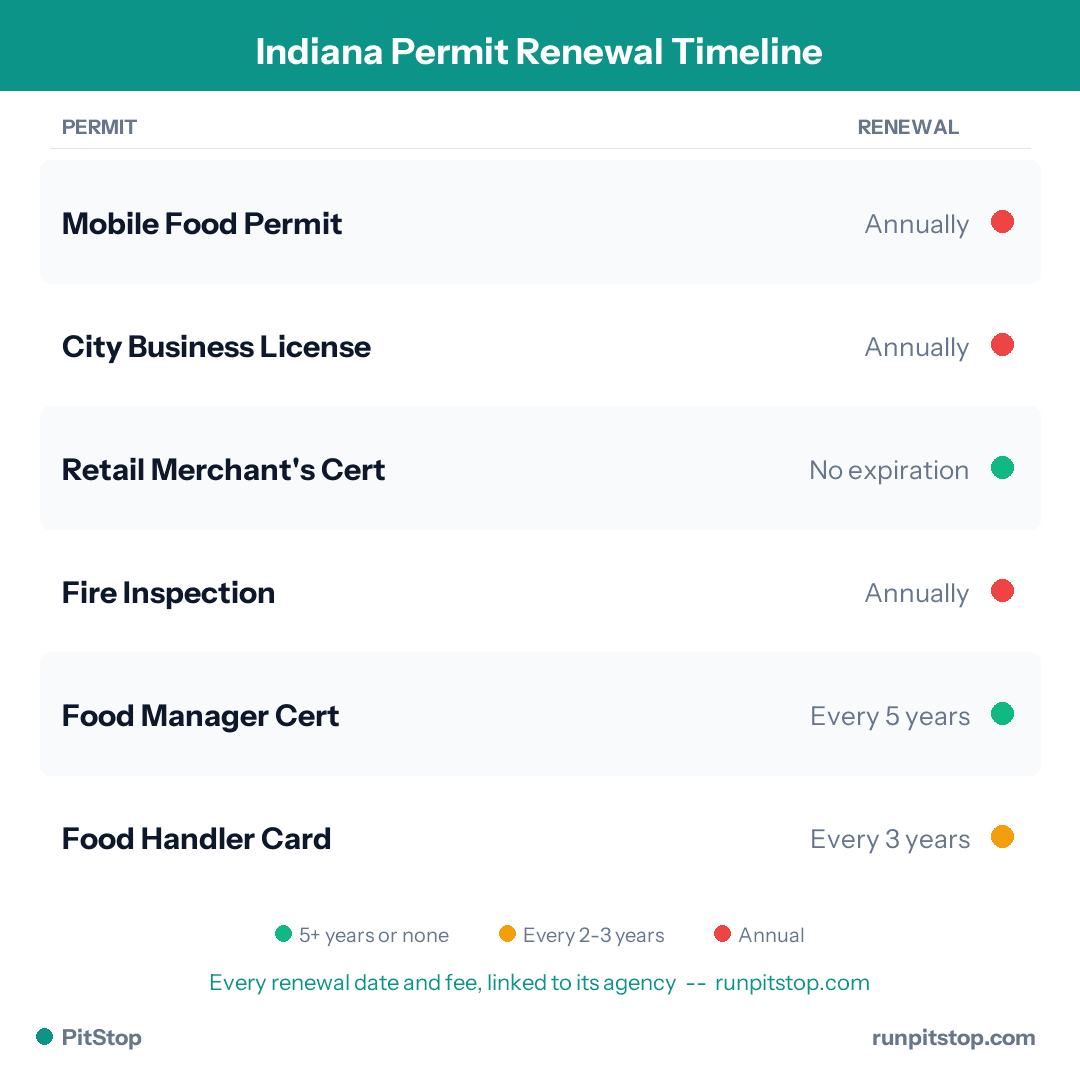
| Permit | Typical Renewal |
|---|---|
| Mobile Food Establishment Permit | Annually |
| City Business License | Annually |
| Retail Merchant's Certificate | No expiration (ongoing filing) |
| Fire Department Inspection | Annually |
Before you apply
Verify every fee in this guide with the issuing agency before you pay it; fee schedules change mid-year and the agency's own page is the only number that counts. Run your first few events through the per-event profit calculator, and start the paperwork 3–4 months before opening day: inspection slots, commissary letters and certifications take longer than the application itself.